Heat Pump Cost for a 3-Bed End Terrace: Full 2026 Breakdown
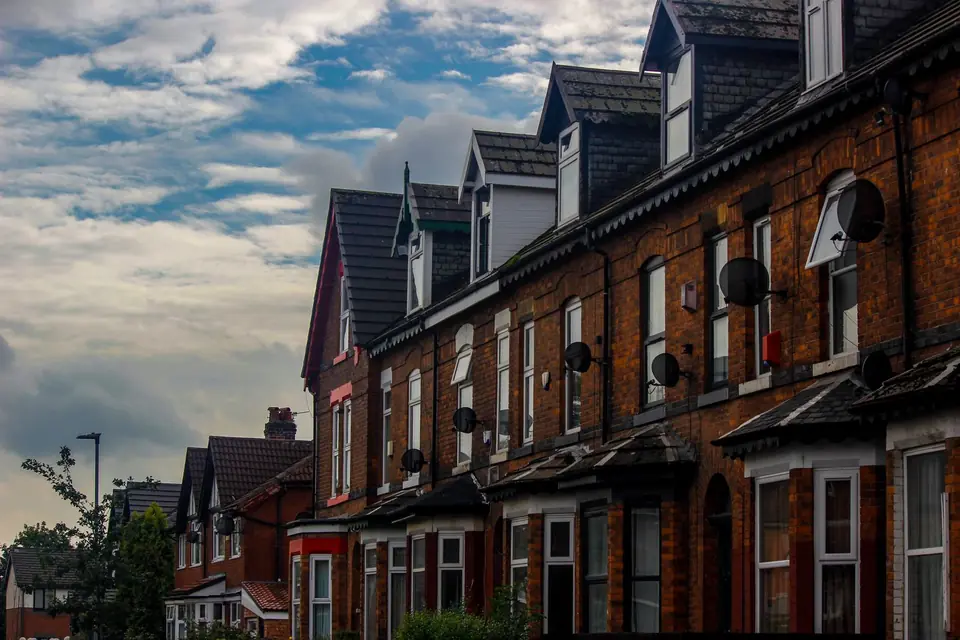
An air source heat pump for a 3-bed end terrace costs £9,500 to £10,900 installed. The £7,500 Boiler Upgrade Scheme grant brings that down to £2,000 to £3,400, and with radiator upgrades and a hot water cylinder the realistic total after the grant is £4,800 to £9,900. At the Ofgem price cap for October to December 2026 a typical end terrace costs £575 a year to run on a heat pump tariff, £246 less than gas, but £841 on standard electricity, which is £20 a year more than the boiler it replaces. The end terrace is the awkward middle of the British housing stock: it has the exposed wall count of a semi on the narrow footprint of a terrace, and almost everything that is different about it comes back to one wall.
In this guide
What an end terrace heat pump really costs Complete cost breakdown End terrace versus mid terrace versus semi The gable wall, and what it actually costs What size heat pump for a 3-bed end terrace Which heat pumps suit an end terrace Radiators, cylinder and pipework Running costs: 3-bed end terrace Insulation changes the answer more than size does The Boiler Upgrade Scheme for an end terrace Is a heat pump worth it for an end terrace Placement, the side wall and one neighbour Getting quotes: what to check Frequently asked questionsWhat an end terrace heat pump really costs
Across every house type in England and Wales, the median air source heat pump installation funded by the Boiler Upgrade Scheme cost £12,908 in April to June 2026, with a quarter of jobs under £11,128 and a quarter over £15,627, according to the Microgeneration Certification Scheme (MCS). A 3-bed end terrace sits below the lower quartile. It is a small house by floor area, it has one party wall doing useful work, it usually keeps a short pipe run from the side or rear wall to the cylinder, and it needs fewer radiators than a semi. What pushes an individual end terrace up the range is almost never the bedroom count. It is the gable.
| End terrace condition | Heat demand | Heat pump size | Installed cost | After £7,500 grant |
|---|---|---|---|---|
| Well insulated: 270mm loft, insulated or filled gable, double glazed | 7,880 kWh | 6 to 8 kW | £9,500 | £2,000 |
| Average: loft and cavity insulation, some draught-proofing | 9,270 kWh | 7 to 9 kW | £10,000 | £2,500 |
| Poor: bare solid gable, thin loft, single glazing in places | 10,290 kWh | 9 to 11 kW | £10,900 | £3,400 |
Heat demand from the DESNZ NEED 2026 dataset, 39,502 gas-heated records. Installed cost covers the unit, labour, controls, commissioning and the MCS certificate. Radiators and cylinder are separate, below. Quotes in the wild spread a little wider than the model, roughly £9,000 to £11,000, depending on pipework and how far the outdoor unit sits from the cylinder.
The three rows are the same house. Nothing changes but the fabric, and the fabric moves the installed price by £1,400 and the annual bill by more than £200. Use our heat pump calculator for an estimate that reflects your own insulation level and heating fuel.
Complete cost breakdown
| Cost element | Range | Notes |
|---|---|---|
| Heat pump unit and installation | £9,500 to £10,900 | 7 to 9 kW air source for most end terraces. Includes unit, pipework, controls, MCS certificate |
| BUS grant | -£7,500 | Deducted from the installer invoice. £9,000 if you are replacing an oil or LPG boiler, which is uncommon on a terrace |
| Net heat pump cost | £2,000 to £3,400 | What you pay for the heat pump itself |
| Radiator upgrades | £1,800 to £3,500 | 3 to 4 of the usual 7 to 9 radiators, and the gable-side rooms are almost always among them. See radiator sizing guide |
| Hot water cylinder | £800 to £1,500 | 170 to 210 litres for a family of three or four. Required if you have a combi boiler |
| Pipework modifications | £0 to £1,000 | If existing pipework is microbore or undersized |
| Concrete plinth | £200 to £500 | Base for the outdoor unit |
| Total out of pocket | £4,800 to £9,900 | After the BUS grant, including all ancillary costs |
0% VAT applies until March 2027. Cost ranges from MCS installation data and Energy Saving Trust.
The spread between £4,800 and £9,900 is almost entirely radiators, cylinder and pipework. The heat pump itself varies by only £1,400 across the whole range of end terraces. If your radiators are already generous, your airing cupboard survived the combi conversion and your pipework is 15mm, you land near the bottom. If the house was replumbed in microbore in 1978, the cylinder went years ago and four radiators are undersized, you land near the top, and the heat pump is the cheapest line on the invoice.
Get heat pump quotes for your home
Tell us about your property to request quotes from MCS-certified installers covering your postcode. Free, no obligation, and nobody calls you unless you tick the box.
- MCS-certified installers only
- Grant of £7,500 handled by the installer
- No obligation, no spam
End terrace versus mid terrace versus semi
This is the comparison that brings most people to this page, and the honest answer is duller than the folklore. An end terrace is not a terrace with a small penalty, and it is not a semi in disguise. Against the DESNZ NEED 2026 data it lands almost exactly midway between the two, fractionally nearer the mid terrace than the semi.
| Property | Heat demand | Heat pump size | Installed cost | Cost on a heat pump tariff |
|---|---|---|---|---|
| 3-bed mid terrace | 8,820 kWh | 6 to 8 kW | £9,500 | £547 |
| 3-bed end terrace | 9,270 kWh | 7 to 9 kW | £10,000 | £575 |
| 3-bed semi-detached | 9,900 kWh | 8 to 10 kW | £10,500 | £614 |
All three at average insulation, from the same model. Installed cost before the grant. See our 2-bed terrace guide, our 3-bed semi guide and our costs by house type guide for the rest of the stock.
Read the middle column rather than the house names. The gap from mid terrace to end terrace is 450 kWh of heat a year. The gap from end terrace to semi is 630 kWh. On gas at 7.97p per kWh and a boiler running at 90%, those gaps are worth about £40 and £56 a year respectively. That is the entire financial content of the phrase end terrace, and it is smaller than one bad month of thermostat habits.
What the table does not show is why the end terrace comes out below the semi at all, because on wall count they are identical. A semi has a front wall, a back wall, one flank wall and one party wall. So does an end terrace. The difference is footprint: the median 3-bed end terrace in the NEED sample is a narrower, shallower house than the median 3-bed semi, so it has less of everything, including less gable to lose heat through. If your end terrace is a wide one, or has a full-width rear extension, expect it to behave like the semi row rather than its own.
The gable wall, and what it actually costs
The gable is the flank wall at the end of the row. On most end terraces it is the largest single wall in the house: two full storeys, the full depth of the plot, usually running up into the roof void, and typically with no windows at all to interrupt it. The front elevation of the same house might have 25 square metres of wall once the door and windows are taken out. The gable has all of its area, all of the time.
In the average case it costs you 450 kWh a year, about £40 on gas or £28 on a heat pump tariff, and that is genuinely not much. The reason the gable matters is not the average, it is the range. It is the one wall in the house whose construction you cannot guess from the street, and it is what decides whether your house sits in the middle row of the table above or the bottom one.
- Solid brick gable, pre-1919. Nine inches of brick, roughly twice the heat loss of a filled cavity for the same area, and worse still in driving rain because wet brick conducts better than dry brick. Gables face the weather more often than any other wall in a terrace, because there is nothing next door to shelter them.
- Unfilled cavity gable, 1930s to 1970s. The cheapest fix in this whole guide. Filling it costs £500 to £900 and starts paying back immediately. Check before you do anything else.
- Rendered or pebble-dashed gable. Render was often applied because the wall was already failing on damp. It tells you nothing about the construction underneath and everything about how the wall has been performing.
- Gable with a chimney breast. Common on older terraces, and an open flue in an unused breast can move more air out of the house than the wall loses through conduction. Draught-proofing or capping it is cheap and immediate.
Move this house from the poor row to the average row, which on an end terrace usually means dealing with the gable, the loft and the draughts together, and you save £90 a year on gas, £137 a year on a heat pump tariff, and around £900 on the installation because the unit drops a size band. Go the whole way to the well-insulated row and it is £213 a year on gas, £269 on a heat pump tariff, and £1,400 off the installation.
Insulating a solid gable on its own is a harder sell than the heat pump industry usually admits. Our solid wall insulation guide puts a whole-house end terrace job at £5,000 to £8,000 internally or £9,000 to £14,000 externally, saving around £270 a year on gas. That is a payback of roughly 19 to 30 years on the internal option, and longer on the external one. It is still the right thing to do before a heat pump, because it lifts the seasonal efficiency the heat pump runs at and shrinks the unit, but it does not pay for itself on fuel alone and nobody should tell you it does. Because the gable is one large unbroken surface with no reveals to detail around, it is the cheapest square metre of any solid wall job, so ask for it to be priced separately rather than as part of a whole-house quote.
Check the cavity before you price anything else
If the gable has an unfilled cavity, cavity wall insulation at £500 to £900 and loft insulation at £300 to £600 do most of the work of a £6,000 internal wall job for a tenth of the money. If you receive a qualifying benefit, ECO4 may pay for it outright, but the scheme closes on 31 December 2026, the work has to be finished by then rather than merely applied for, and government has confirmed there will be no successor supplier obligation. Model your own house with the insulation calculator.
What size heat pump for a 3-bed end terrace
Most 3-bed end terraces end up with a 7 to 9 kW air source heat pump. A well-insulated one with an insulated or filled gable manages on 6 to 8 kW. One with a bare solid gable, a thin loft and some original glazing needs 9 to 11 kW, which is the same unit a 3-bed semi takes, and costs the same to buy.
The number that decides it is not the bedroom count but the room-by-room heat loss calculation your MCS installer is required to produce. Every room is surveyed and its loss worked out at the design outdoor temperature, around minus 3C in the south of England and colder further north. On an end terrace there is one specific thing to check in that document: what U value the installer has assigned to the gable. A survey that treats the gable as a standard filled cavity when it is nine inches of solid brick will undersize the unit and leave you cold in February. One that assumes solid brick when the cavity was filled in 2009 will oversize it, which costs more to buy, cycles on and off, and runs less efficiently than a unit matched to the house. Ask to see the wall constructions listed in the heat loss report, not just the total.
If a quote arrives without a room-by-room calculation attached, it was sized by guesswork. On an end terrace that guesswork is riskier than on a mid terrace, because the gable is precisely the variable a rule of thumb cannot see.
Which heat pumps suit an end terrace
The 7 to 9 kW class covers most end terraces, and it is the most competitive part of the UK market, so you will be quoted from a short and familiar list.
| Model | Outputs for an end terrace | Refrigerant | Max flow temp | Why pick it |
|---|---|---|---|---|
| Vaillant aroTHERM plus | 7 kW, 10 kW | R290 | 75C | Runs hot enough to keep more of the existing radiators, which matters if the gable rooms are tight on wall space |
| Mitsubishi Ecodan | 8.5 kW | R32 or R290 by model | 60 to 70C | Largest UK installer base, easy parts and servicing |
| Daikin Altherma 3 R | 8 kW | R32 | 60C (H HT range 70C) | Long track record and the widest installer network; pick the H HT range if you must keep small radiators |
| Samsung EHS Mono | 8 kW | R32 | 65 to 70C | Value option, and a compact outdoor unit for a narrow side passage |
| Octopus Cosy 6 and Cosy 9 | 5.6 kW, 8.7 kW at 50C flow | R290 | 75C | Sized around exactly this house, installed and supported by Octopus with its Cosy tariff |
Outputs are the nominal ratings in each range that cover a 3-bed end terrace. Your heat loss calculation decides which one you need.
At this size the brands are close enough that the design, not the badge, decides the result. Ask for a design flow temperature of 50C or lower, a seasonal coefficient of performance above 3.5 in writing, and an MCS 020 noise assessment for the exact outdoor unit position. The R290 units run hotter, which can save a radiator or two in an older terrace with awkward gable-wall rooms. The Ecodan and Altherma ranges have the widest parts availability if you plan to use a local independent installer. Our heat pump noise guide explains what the decibel figures on the datasheet mean in a real garden.
Radiators, cylinder and pipework
A heat pump heats water to 40 to 50C instead of the 65 to 75C a gas boiler uses, so each radiator has to be larger to deliver the same warmth into the same room. A 3-bed end terrace typically has 7 to 9 radiators and 3 to 4 need upsizing. Budget £1,800 to £3,500.
Which ones is unusually predictable on an end terrace: the rooms against the gable. They have the highest heat loss in the house and, because the radiator was sized by a boiler installer with 70C water to play with, they are frequently the ones already struggling on a cold night. If there is a room in your house that never quite gets warm in January, it is almost certainly on the gable, and it is the first radiator the heat pump designer will change. A double-panel radiator in the same wall slot usually solves it without losing floor space, which matters in a narrow house. Our radiator sizing guide explains how installers make that call.
You also need a hot water cylinder, normally 170 to 210 litres for a family of three or four. End terraces built before the combi era usually kept an airing cupboard on the landing, and if yours survived the boiler swap it will take a 200 litre cylinder without argument. If it was ripped out to make an en suite or a wardrobe, you are back to the terrace problem of finding somewhere for it: the box room, a boxed corner of the back bedroom, or the loft, which needs boarding and a slimline cylinder that fits the hatch. Allow £800 to £1,500 for the cylinder and more for the pipework if it ends up far from the outdoor unit.
The common budget breaker is microbore pipework, the 8mm or 10mm pipe fitted in many terraces from the 1970s onwards. It is fine at boiler temperatures but a heat pump moves more water more slowly, and microbore chokes it. Replacing the runs to the upsized radiators with 15mm or 22mm pipe costs £500 to £1,000. Ask the installer to check pipe sizes during the survey rather than discovering it on installation day.
Running costs: 3-bed end terrace
These figures use the Ofgem price cap for 1 October to 31 December 2026: electricity 26.32p per kWh and gas 7.97p per kWh. Gas rose 9% at this cap change while electricity barely moved, which is why a heat pump on a standard tariff now costs about the same to run as a gas boiler rather than clearly less.
| Heating system | Annual cost | Saving vs gas |
|---|---|---|
| Gas boiler | £821 | Baseline |
| Heat pump (standard tariff) | £841 | -£20 (costs more than gas) |
| Heat pump (heat pump tariff) | £575 | £246 saving |
| Electric boiler | £2,440 | n/a |
9,270 kWh heat demand, a typical 3-bed end terrace with average insulation. Gas at 7.97p/kWh and 90% boiler efficiency. Heat pump COP 2.9 at 26.32p/kWh, or 18p/kWh effective on a well-scheduled heat pump tariff such as Octopus Cosy. Electric boiler at 26.32p/kWh. Standing charges excluded.
The tariff makes or breaks this. On a heat pump tariff you save £246 a year against gas, which is £4,920 over 20 years, and disconnecting the gas supply altogether saves a further £108 a year in standing charge. On a standard electricity tariff the heat pump costs £20 a year more than the boiler it replaces. That is close enough to nothing that nobody should feel cheated, but it is not a saving, and a page that told you otherwise would be lying to you. The case for a heat pump in an end terrace on the gas grid rests on moving to a heat pump tariff and scheduling around it. Our tariff guide covers how an effective rate near 18p is actually achieved, and our running costs guide has the full comparison across every property type.
If your end terrace is all-electric rather than on gas, the picture is completely different and much better: see our electric boiler versus heat pump guide, because the £2,440 row above is what you are replacing.
Insulation changes the answer more than size does
Here is the result most heat pump content gets backwards. A harder-to-heat house does not make a heat pump save more money. It makes it save less.
| End terrace condition | Gas boiler | Heat pump, standard tariff | Heat pump, heat pump tariff | Saving on a tariff |
|---|---|---|---|---|
| Well insulated, 7,880 kWh | £698 | £648 | £443 | £255 |
| Average, 9,270 kWh | £821 | £841 | £575 | £246 |
| Poor, 10,290 kWh | £911 | £1,042 | £712 | £199 |
Seasonal efficiency assumed at 3.2, 2.9 and 2.6 respectively, because a leakier house forces a higher flow temperature and the heat pump runs worse. Gas boiler at 90% throughout.
Read the last column downwards. The saving falls from £255 to £246 to £199 as the house gets worse. The reason is that a poorly insulated house needs a higher flow temperature to stay warm, and a heat pump loses efficiency faster than the extra demand gains it revenue. A heat pump in a leaky house burns more electricity per unit of heat and needs more units of heat, and the second effect never catches the first. On a standard tariff it is starker still: the well-insulated end terrace is £50 a year cheaper than gas, the average one is £20 more, and the poorly insulated one is £131 more.
The practical reading is that insulation is not a nice-to-have you do afterwards if there is money left. On an end terrace it is the thing that decides whether the heat pump is a modest win or a modest loss, and the gable is where most of it lives. Our old house guide covers the order to do the work in, and underfloor insulation is worth pricing at the same time if you have suspended timber floors.
The Boiler Upgrade Scheme for an end terrace
The Boiler Upgrade Scheme pays £7,500 towards an air source or ground source heat pump in England and Wales, and since July 2026 £9,000 for homes replacing an oil or LPG boiler, which is uncommon in a terrace. For a well-insulated end terrace at £9,500 installed, the grant covers all but £2,000 of the heat pump. Your MCS-certified installer applies for it and it comes off the invoice before you pay anything.
The scheme was extended to 2030 in April 2026 and installations carry 0% VAT until March 2027. An end terrace qualifies exactly as any other house does, provided it has a valid EPC and the heat pump replaces a fossil fuel system. There is one detail worth knowing: your EPC must not carry outstanding loft or cavity wall insulation recommendations, and an end terrace with an unfilled gable cavity is the classic case that trips this up. Check the EPC before you book the survey, not after. Read our BUS grant guide for the full eligibility rules, our grant checker for anything else you might qualify for, and our Warm Homes Plan guide for what replaces supplier-funded schemes from 2027.
Is a heat pump worth it for an end terrace
Against a new gas boiler at £2,000 to £3,500, the whole heat pump job at £4,800 to £9,900 after the grant costs £1,300 to £7,900 more. At £246 a year on a heat pump tariff that is a payback of roughly 5 to 32 years, and the top of that range is longer than the heat pump will last. Where you land depends almost entirely on the radiator and cylinder work, not on the heat pump.
So the honest answer splits into two houses that happen to look identical from the pavement. An end terrace with generous radiators, a surviving airing cupboard and 15mm pipework pays the difference back in well under a decade, and the heat pump is clearly the better buy. An end terrace that needs four radiators, a loft cylinder and a replumb does not pay back on running cost alone within the life of the equipment. It is still a reasonable thing to do, but it is a choice about getting off gas rather than a financial decision, and it should be presented to you as one.
On a standard electricity tariff there is no payback at all in the average case, because the heat pump costs about £20 a year more to run than the boiler. A heat pump tariff is a condition of the financial case, not a bonus on top of it. Against that, a heat pump lasts 20 to 25 years compared with 12 to 15 for a boiler, so a like-for-like comparison over the equipment's life is kinder than the annual figures suggest. Run your own numbers with our boiler vs heat pump comparison, and read heat pump vs new boiler for the 15-year view.
Ground source is not worth considering here. It needs a 100 metre borehole or around 200 square metres of ground loop, costs £20,000 to £30,000, and an end terrace garden rarely has either. If your terrace is Victorian with solid walls throughout rather than just a solid gable, our Victorian terrace guide is the closer fit, and our 3-bed detached guide covers the step up if you are comparing house types before you move.
Placement, the side wall and one neighbour
This is where an end terrace is genuinely easier than the house next door, and it is worth a few hundred pounds. A mid terrace has two neighbours, no side access and a rear yard in which almost no position clears every boundary. An end terrace has one neighbour, a gable that usually comes with a side passage or a strip of side garden, and a wall that no window of theirs faces.
The MCS 020 noise standard requires the sound at the nearest habitable room window of a neighbouring house to be 42 dB or lower. On an end terrace the only attached neighbour is on the far side of the house from the gable, so a unit on or near the gable is about as far from their windows as your plot allows. That is usually an easy pass with no acoustic enclosure, where a mid terrace in the same street may need one at £300 to £800. Modern units run at 50 to 55 dB at one metre and all of them have a quiet mode worth setting for 11pm to 7am, though the assessment uses the declared sound power at full output, so pick the quiet unit rather than relying on the setting.
Three things do catch end terraces out. First, permitted development in England requires the outdoor unit to sit at least one metre from the property boundary, and an end terrace gable frequently sits within a metre of a shared path, a fence line or the pavement itself. Measure before you assume the side is available. Second, if the gable faces a highway and you are in a conservation area, the unit cannot go on that wall, which removes the easy option and pushes you into the rear garden. Third, the gable is where the gas meter box, the boiler flue and the soil stack usually are, so the space is less empty than it looks. Our planning permission guide covers the exceptions, including listed buildings.
Where the side is available, it is the best position in the house: short pipe run to a cylinder on the landing, no fan pointing into your own kitchen window, and an unobstructed airflow along the passage. Tell your one neighbour before the survey rather than after the delivery lorry arrives.
Getting quotes: what to check
Get three quotes from MCS-certified installers and compare them on the design rather than the headline price. On an end terrace each quote should include:
- A room-by-room heat loss calculation with the design outdoor temperature stated.
- The wall construction assigned to the gable, stated explicitly, with the U value used.
- The design flow temperature, ideally 50C or lower, and the seasonal efficiency the installer expects at that temperature.
- A radiator schedule listing all 7 to 9 emitters, which ones change and their new sizes, with the gable-side rooms called out.
- The cylinder size and exactly where it will go.
- An MCS 020 noise assessment for the proposed unit position, with the boundary distance marked as well as the neighbour's nearest window.
- The warranty on the unit, usually 5 to 7 years, the warranty on the installation, and who you call when something fails.
- Confirmation that the installer will apply for the Boiler Upgrade Scheme and deduct it from the invoice.
Installation takes 2 to 3 days for an end terrace, and up to 4 when most radiators are being swapped or the cylinder is going into the loft. Find installers through the MCS installer search.
Reduce vibration reaching the party wall with anti-vibration pads. Manage the system with a smart thermostat. Track what it actually uses with an energy monitor.
Frequently asked questions
How much does a heat pump cost for a 3-bed end terrace?
£9,500 to £10,900 installed, depending on insulation. After the £7,500 BUS grant you pay £2,000 to £3,400 for the heat pump itself, or £4,800 to £9,900 once radiators, a cylinder and pipework are included.
Does an end terrace cost more to heat than a mid terrace?
Yes, but by less than most owners expect. A 3-bed end terrace uses 9,270 kWh of heat a year against 8,820 kWh for the same size mid terrace, a difference of 450 kWh or about £40 a year on gas. The gable is the whole of that difference. A 3-bed semi uses 9,900 kWh, so an end terrace sits almost exactly between the two.
What size heat pump does a 3-bed end terrace need?
7 to 9 kW for most, 6 to 8 kW if the gable is insulated, 9 to 11 kW if it is bare solid brick. The installer's heat loss calculation settles it, and on an end terrace you should check which wall construction it assumed for the gable.
How much does a heat pump cost to run in a 3-bed end terrace?
£575 a year on a heat pump tariff against £821 for gas at the October to December 2026 price cap, a £246 saving. On standard electricity it is £841, which is £20 a year more than gas. See our running costs guide.
Should I insulate the gable wall before fitting a heat pump?
If it is a cavity, yes, without hesitating: £500 to £900 and it pays back quickly. If it is solid brick, internal insulation costs £5,000 to £8,000 and saves around £270 a year on gas, a payback of roughly 19 to 30 years. It still lifts efficiency and takes about £900 off the installation, so price it, but do not expect it to pay for itself on fuel. See our solid wall insulation guide.
Is a heat pump worth it for a 3-bed end terrace?
On a heat pump tariff, usually. The £246 a year saving pays back the £1,300 to £7,900 extra over a new boiler in about 5 to 32 years depending on radiator work. On a standard tariff there is no saving to pay anything back, so the tariff is the whole case. Compare with our boiler vs heat pump tool.
Data sources
Heat demand from the DESNZ National Energy Efficiency Data-Framework (NEED) 2026, 39,502 gas-heated records, as implemented in this site's shared heat model. Installed prices from the MCS Data Dashboard (BUS-funded installations, England and Wales, April to June 2026). Energy prices from the Ofgem price cap for 1 October to 31 December 2026. Grant rules from GOV.UK. Insulation and ancillary cost ranges from Energy Saving Trust and installer market data. Our full methodology explains how the model is built.