Heat Pump for a Victorian Terrace: Cost and What It Takes in 2026
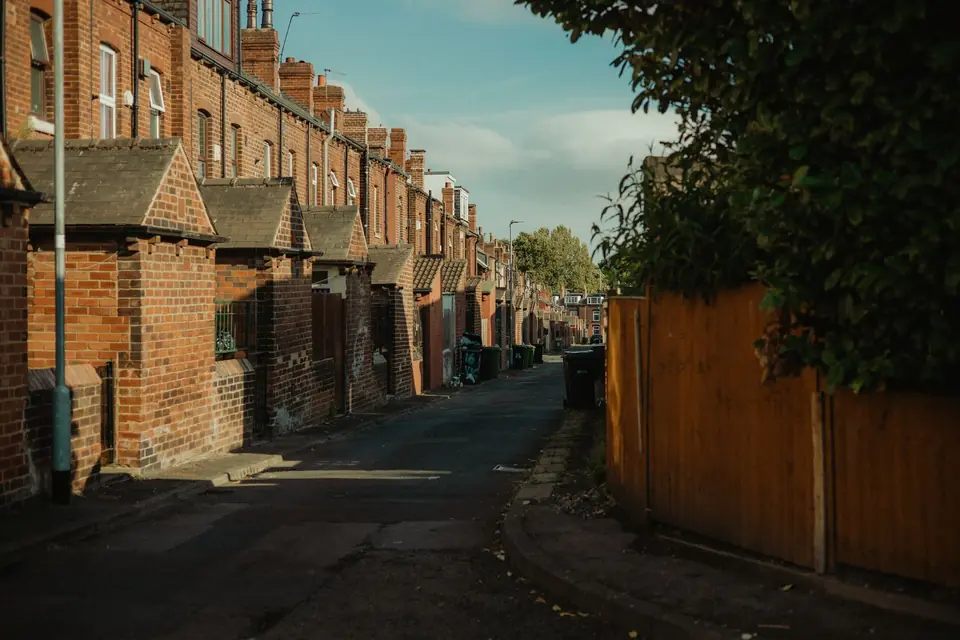
An air source heat pump for a two or three bedroom Victorian terrace costs £10,000 to £14,000 installed, £1,000 to £2,000 more than a 1930s semi, because solid brick walls mean a bigger unit, more radiators change, and the pipework from the yard to a cylinder upstairs is long and awkward. The £7,500 Boiler Upgrade Scheme grant brings the heat pump down to £2,500 to £6,500; the whole job with radiators and a cylinder is £13,000 to £18,000 before the grant and £5,500 to £10,500 after it. A partly upgraded terrace using 16,000 kWh a year costs £993 a year to run on a heat pump tariff, £424 less than gas. This is the cost companion to our old house guide, for a terrace built between about 1850 and 1914 with nine-inch solid walls, sash windows, suspended timber floors, a rear outrigger and no side access.
In this guide
What a Victorian terrace heat pump really costs Complete cost breakdown Victorian terrace versus semi versus modern terrace What size heat pump, and insulate first in cost order Which heat pumps suit a Victorian terrace Cast iron radiators, cylinder and pipework Running costs: Victorian terrace The Boiler Upgrade Scheme for a terrace Is a heat pump worth it for a Victorian terrace Placement, conservation areas and two party walls Getting quotes: what to check Frequently asked questionsWhat a Victorian terrace heat pump really costs
The median heat pump installation funded by the Boiler Upgrade Scheme cost £12,908 in April to June 2026, with a quarter of jobs under £11,128 and a quarter over £15,627, according to MCS. A Victorian terrace sits at the median, not below it, because a small house can still be a hard one to heat: a nine-inch solid wall loses roughly twice the heat of a filled cavity, the sashes leak air, the floor sits over a ventilated void, high ceilings add a fifth to the volume, and the outrigger adds two exposed walls and a cold bathroom at the far end of the pipe run.
| Terrace condition | Heat demand | Heat pump size | Installed cost | After £7,500 grant |
|---|---|---|---|---|
| Uninsulated: bare loft, single-glazed sashes, bare suspended floor, solid walls | 18,000 to 22,000 kWh | 11 to 12 kW | £12,500 to £14,000 | £5,000 to £6,500 |
| 270mm loft, draught-proofed sashes, insulated floor, double or secondary glazing | 12,000 to 15,000 kWh | 9 to 10 kW | £11,000 to £12,500 | £3,500 to £5,000 |
| All of the above plus internal wall insulation | 10,000 to 12,000 kWh | 8 to 9 kW | £10,000 to £11,500 | £2,500 to £4,000 |
Installed cost covers the unit, the primary pipe run to the cylinder, controls, commissioning and the MCS certificate. Radiators and the cylinder are itemised below.
Within each row, the pipe run and the cylinder set the price. A cylinder cupboard still in the outrigger bathroom, directly above the unit, is a short job; a cylinder in a front bedroom, 15 metres of pipe away, is not. Use our heat pump calculator for an estimate at your own insulation level and fuel.
Complete cost breakdown
| Cost element | Range | Notes |
|---|---|---|
| Heat pump unit and installation | £10,000 to £14,000 | 8 to 12 kW air source. Unit, primary pipework, controls, MCS certificate |
| BUS grant | -£7,500 | Deducted from the invoice. £9,000 if replacing an oil or LPG boiler |
| Net heat pump cost | £2,500 to £6,500 | What you pay for the heat pump itself |
| Radiator upgrades | £1,500 to £4,000 | 2 to 4 of the usual 7 to 9 at a 55C design, 5 to 7 at 45C. See radiator sizing guide |
| Hot water cylinder | £800 to £1,500 | 150 to 210 litres. Required with a combi, plus £300 to £600 if a cupboard is built |
| Pipework modifications | £500 to £1,500 | 10 to 20 metres of insulated primary pipe, and any microbore replaced |
| Concrete plinth | £200 to £500 | Base for the outdoor unit, or a wall bracket on the outrigger |
| Total out of pocket | £5,500 to £10,500 | After the BUS grant, including all ancillary costs |
0% VAT applies until March 2027. The total is the realistic whole-job range, £13,000 to £18,000 before the grant; not every line hits its maximum on the same house. Costs from MCS installation data and Energy Saving Trust.
Two lines do the damage compared with a semi. Radiators: a terrace has 7 to 9, the rooms are tall and the front rooms sit behind the coldest wall, so at a 45C design most of them change; a high temperature model designed at 55C cuts that to two to four. Pipework: 28mm insulated primaries have to reach the cylinder upstairs, usually up the outside of the outrigger. Suspended timber floors are the one break the house gives you, because lifting boards to run new pipe is a morning's work where a concrete-floored semi needs it chased in.
Get heat pump quotes for your home
Tell us about your property to request quotes from MCS-certified installers covering your postcode. Free, no obligation, and nobody calls you unless you tick the box.
- MCS-certified installers only
- Grant of £7,500 handled by the installer
- No obligation, no spam
Victorian terrace versus semi versus modern terrace
A Victorian terrace shares two walls, so on paper it should be cheap to heat. In practice a partly upgraded one uses the same heat as a 1930s semi with filled cavities and costs £1,000 to £2,000 more to fit a heat pump to, because the unit is bigger, the access worse and the pipe run longer.
| Property | Typical heat demand | Heat pump size | Installed cost | After £7,500 grant |
|---|---|---|---|---|
| Victorian mid-terrace, solid walls, loft, floor and glazing upgraded | 12,000 to 15,000 kWh | 9 to 10 kW | £11,000 to £12,500 | £3,500 to £5,000 |
| Victorian mid-terrace, solid walls, uninsulated | 18,000 to 22,000 kWh | 11 to 12 kW | £12,500 to £14,000 | £5,000 to £6,500 |
| 3-bed 1930s semi, cavities filled | 12,000 to 15,000 kWh | 8 to 10 kW | £9,000 to £12,000 | £1,500 to £4,500 |
| 3-bed cavity-wall end-terrace | 10,000 to 12,000 kWh | 7 to 9 kW | £9,000 to £11,000 | £1,500 to £3,500 |
Semi and end-terrace figures from our 3-bed semi guide. See our costs by house type guide for flats, bungalows and larger homes.
At the October to December 2026 price cap the cavity-wall semi at 12,000 kWh costs £1,063 a year on gas, £1,089 on a heat pump with a standard tariff and £745 on a heat pump tariff. An insulated Victorian terrace at 11,000 kWh comes in at £974, £998 and £683. Insulate the walls and the terrace wins.
What size heat pump, and insulate first in cost order
A Victorian terrace needs an 8 to 12 kW heat pump, and where you land in that range depends on what you do to the fabric first. The size comes from a room-by-room heat loss calculation at the design outdoor temperature, around minus 3C in the south of England, and a solid brick wall at around 2.1 W/m²K, against 0.55 for a filled cavity, is close to half the loss in a bare terrace. A quote without the calculation was sized by guesswork. Do the fabric work in cost order: every 2,000 kWh or so off the annual demand is roughly a kilowatt off the peak, and each kilowatt band is £1,000 to £1,500 off the installation.
- Loft to 270mm: £200 to £600 DIY, £400 to £800 fitted. The bare or 50mm loft in many terraces is the biggest cheap fix, worth around 2,000 to 2,500 kWh a year. See our loft insulation guide and DIY loft guide; on a qualifying benefit it may be free under the Great British Insulation Scheme.
- Draught-proof the sashes: £80 to £150 per window professionally, £15 to £30 DIY. Brush pile in the sash channels and meeting rail, sealed floorboard and skirting gaps and a balloon in any unused chimney take 1,000 to 1,500 kWh off a heat loss that is often a quarter air leakage. Our draught-proofing guide has the sash method.
- Insulate the suspended floor: £500 to £1,000 from below, £800 to £1,500 by lifting boards. Mineral wool between the joists from a cellar or crawl space is the least disruptive job here; otherwise the boards come up, which pairs well with new pipework. Worth 1,000 to 1,500 kWh. See our underfloor insulation guide and keep the air bricks clear.
- Double or secondary glazing: £1,000 to £3,000 for secondary, £4,000 to £8,000 for replacement sashes. The dearest step, worth 1,500 to 2,000 kWh, so do it last unless the sashes are rotten. Secondary glazing keeps the originals, which conservation officers prefer.
- Then internal wall insulation on the coldest rooms: £1,500 to £3,000 for two rooms, £4,000 to £7,000 for the whole house. Start with the front room, the front bedroom and the outrigger. This takes a terrace from 12,000 to 15,000 kWh to 10,000 to 12,000 and from a 9 to 10 kW unit to 8 to 9 kW. Our solid wall insulation guide has the costs; done badly it traps damp in the brick, so read our condensation guide first.
The worked example in this guide has done the first two steps and stopped: 270mm in the loft and draught-proofed sashes, a bare floor and single glazing. It uses about 16,000 kWh a year, needs a 10 kW unit, and is the terrace most readers own. Model yours with the insulation calculator.
Flow temperature: 55C keeps the radiators, 45C keeps the bills down
A high temperature model designed at 50 to 55C keeps most existing radiators, cast iron included, and costs less to install. A 45C design replaces most radiators but runs more efficiently, because every degree of flow temperature is worth roughly 2 to 3% on the bill. Insulated terrace: take 45C. Not insulating yet: take 55C, keep the radiators and turn the flow down as the fabric improves. Get the design flow temperature and expected SCOP in writing.
Which heat pumps suit a Victorian terrace
The models that suit a Victorian terrace reach higher flow temperatures without a backup heater, so the installer can design at 55C and keep more of the radiators you have. Outputs and maximum flow temperatures were checked against the manufacturer pages in the data sources.
| Model | Outputs | Refrigerant | Max flow temp | Why pick it |
|---|---|---|---|---|
| Vaillant aroTHERM plus | 7 kW, 10 kW, 12 kW | R290 | 75C | Highest ceiling in the group, keeps the most existing radiators |
| Daikin Altherma 3 H MT | 8 kW, 10 kW, 12 kW | R32 | 65C | Boiler-replacement range with the widest parts network |
| Mitsubishi Ecodan R290 | 8.5 kW, 10 kW, 12 kW | R290 | 75C | Quiet unit for a yard with two neighbours, largest UK installer base |
| Viessmann Vitocal 250-A | 10 kW, 13 kW | R290 | 70C | Built for modernisation jobs; the 13 kW covers a bare terrace |
| Octopus Cosy 9 | 8.7 kW at 50C, 8.1 kW at 65C | R290 | 70C | For the upgraded end, installed by Octopus with its Cosy tariff |
Outputs are the nominal sizes in each range that cover a terrace. The Cosy 9 is rated at 50C, so it suits the insulated end of the table. Your heat loss calculation decides the size.
At this size the brands are close and the design decides the result. A 75C ceiling is headroom, not a running temperature: a unit that can reach 75C is working comfortably at 55C on the coldest day. The 65C Daikin needs the radiators checked more carefully but has the widest parts network for a local installer. Ask for an SCOP above 3.0 at the design flow temperature and an MCS 020 noise assessment for the exact spot in the yard. Our heat pump noise guide explains the decibel figures.
Cast iron radiators, cylinder and pipework
A heat pump designed at 55C needs about 30% more radiator surface than a boiler at 70C, and at 45C about double. Victorian terraces are better placed than most, because the radiators fitted in the 1970s and 1980s were often oversized for the walls and the rooms have wall space for tall column radiators. Of the usual 7 to 9, expect two to four to change at 55C, usually the front room, front bedroom and outrigger bathroom, and five to seven at 45C, for £1,500 to £4,000. Our radiator sizing guide explains how installers decide.
Cast iron radiators can stay if they are big enough, and many are: they hold a lot of water and give off heat slowly, which suits a heat pump's steady low temperature. The installer works out the output at the design flow temperature from the section count and height, and if it falls short a second one in the same style is the usual answer. Where a radiator does change, steel column radiators give the period look at a third of the price of cast iron.
You also need a hot water cylinder, 150 to 210 litres. Terraces that never had a combi often still have the cylinder cupboard in the outrigger bathroom, the best spot in the house, directly above the kitchen and one short run from the unit. Otherwise it goes in a bedroom cupboard, the alcove beside a chimney breast where a slimline 450mm cylinder fits, or the box room, at £800 to £1,500 plus £300 to £600 for a cupboard. Pipework is where terrace quotes vary most: the 28mm insulated primaries run 10 to 20 metres, cheapest up the outside of the outrigger in a boxed duct, and any 8mm or 10mm microbore needs replacing. Allow £500 to £1,500, and ask the installer to lift a board and check pipe sizes at the survey.
Running costs: Victorian terrace
These figures use the Ofgem price cap for 1 October to 31 December 2026: electricity 26.32p per kWh and gas 7.97p per kWh, a gas boiler at 90% efficiency and a heat pump at a seasonal COP of 2.9, the figure to expect from a 50 to 55C design.
| Heating system | Annual cost | Saving vs gas |
|---|---|---|
| Gas boiler | £1,417 | Baseline |
| Heat pump (standard tariff) | £1,452 | -£35 (about level) |
| Heat pump (heat pump tariff) | £993 | £424 saving |
16,000 kWh heat demand, a terrace with loft insulation and draught-proofed sashes but single glazing and a bare floor. Gas at 7.97p/kWh and 90% boiler efficiency. Heat pump COP 2.9 at 26.32p/kWh, or 18p/kWh effective on a well-scheduled heat pump tariff such as Octopus Cosy. Standing charges excluded.
The uninsulated terrace at 20,000 kWh costs £1,771 a year on gas, £1,815 on a heat pump with a standard tariff and £1,241 on a heat pump tariff, so the saving against gas grows to £530 as the house gets harder to heat while the standard tariff falls to £44 a year behind. Insulate down to 12,000 kWh and the figures are £1,063, £1,089 and £745. The £424 saving at 16,000 kWh is £8,480 over 20 years, plus the gas standing charge if you disconnect. Read our running costs guide and our tariff guide for how to get an effective rate near 18p.
The Boiler Upgrade Scheme for a terrace
The Boiler Upgrade Scheme pays £7,500 towards an air source or ground source heat pump in England and Wales, and since July 2026 £9,000 where an oil or LPG boiler is replaced. Your MCS-certified installer applies and the grant comes off the invoice, so the heat pump itself costs £2,500 to £6,500. The scheme runs to 2030, installations carry 0% VAT until March 2027, and a bare loft no longer blocks the grant, though it should still be the first thing you fix. Read our BUS grant guide for the rules, our grant checker for anything else you qualify for, and our Warm Homes Plan guide for insulation funding. On a qualifying benefit, ECO4 can pay for wall insulation outright.
Is a heat pump worth it for a Victorian terrace
Against a new gas boiler at £2,000 to £3,500, a heat pump for a terrace costs £2,000 to £8,500 more once radiators and the cylinder are included and the grant is taken off. At £424 a year on a heat pump tariff that is a payback of 5 to 20 years, and the unit lasts 20 to 25 years against 12 to 15 for a boiler. The case is strongest for a terrace with the cylinder cupboard still in the bathroom, oversized radiators and a boiler due anyway, and weakest for a bare terrace on a standard tariff, where the heat pump costs £44 a year more than gas and the money should go on the fabric first. Run your own figures with our boiler vs heat pump comparison, read heat pump vs new boiler for the 15-year view, and see why an electric boiler costs about three times as much to run in our electric boiler vs heat pump guide.
Placement, conservation areas and two party walls
With no side access the outdoor unit goes in the rear yard, and the usual spot is the side wall of the outrigger, facing across the yard: a short pipe run to the bathroom above, off the rear wall where the kitchen door and window are, and clear air in front. Avoid the corner where the outrigger meets the main house, because two walls reflect the sound and add around 3 dB to the noise calculation. A 10 kW monobloc weighs 100 to 180 kg and comes through the front door and out through the kitchen on a stair-climbing trolley; if your street has a rear alley, say so at the survey.
Permitted development in England used to require one metre from every boundary. That rule went in May 2025, and the conditions now are the MCS 020 noise limit of 42 dB at the nearest neighbour's habitable room window, a unit under 1.5 cubic metres, and nothing on a wall facing a highway. With two neighbours whose rear windows are two to four metres away, the assessment has to pass on both sides. Modern units are 45 to 55 dB at one metre and most terraces pass with the unit in the middle of the outrigger wall; one forced towards a fence may need an acoustic enclosure at £300 to £800. Tell both neighbours before the survey. Our planning permission guide covers the rules and our noise guide the numbers.
Conservation areas do not stop you: an air source heat pump is still permitted development in a conservation area in England as long as it is not on a wall or roof facing a highway and is no nearer the road than the house, and a rear yard meets both tests. A listed terrace needs listed building consent for the unit, the pipework and the holes through the wall. Check for an Article 4 direction on your street too.
Getting quotes: what to check
Get three quotes from MCS-certified installers and compare them on the design rather than the price. Each quote should include:
- A room-by-room heat loss calculation using solid brick at around 2.1 W/m²K, not a default cavity figure, with the design outdoor temperature stated.
- The design flow temperature, 55C or 45C, and the SCOP expected at it, in writing.
- A radiator schedule listing all 7 to 9 emitters, which stay, which change, and their new sizes.
- The cylinder size and location, ideally the outrigger bathroom, and the route and length of the primary pipework.
- An MCS 020 noise assessment for the exact spot on the outrigger wall with both neighbours' nearest windows marked, and confirmation of conservation area, Article 4 or listed status.
- The unit warranty, usually 5 to 7 years, the installation warranty, and confirmation that the installer will claim the Boiler Upgrade Scheme off the invoice.
Installation takes 3 to 4 days in a terrace, a day more than a semi for the pipe run and the carry-through. Find installers through the MCS installer search, and read our old house guide for the listed building and period detail that applies to every pre-war home.
If the unit sits on a plinth against a wall you share, anti-vibration pads under its feet stop the hum reaching next door's bedroom.
Frequently asked questions
How much does a heat pump cost for a Victorian terrace?
£10,000 to £14,000 installed. After the £7,500 BUS grant you pay £2,500 to £6,500 for the heat pump, or £5,500 to £10,500 with radiators and a cylinder. Running it costs £993 a year on a heat pump tariff at 16,000 kWh, £424 less than gas.
Do I need to insulate a Victorian terrace before fitting a heat pump?
Not for the grant, but you should. Loft, draught-proofed sashes and an insulated floor cost £1,500 to £4,000 together and take the heat pump from 12 kW to 9 or 10 kW, saving £1,000 to £3,000 to install and £250 to £500 a year to run. Then insulate the coldest walls; see our solid wall insulation guide.
What size heat pump does a Victorian terrace need?
8 to 12 kW. Uninsulated needs 11 to 12 kW, one with loft, floor, draught-proofing and double glazing needs 9 to 10 kW, and one with internal wall insulation as well needs 8 to 9 kW. The heat loss calculation decides. Try our heat pump calculator first.
Can I keep cast iron radiators with a heat pump?
Yes, if they are big enough for the room at the design flow temperature, and many are. A 55C design with a high temperature model keeps most of them. Where one falls short, add a second in the same style or swap to a column radiator. See our radiator sizing guide.
Where does the outdoor unit go on a terrace with no side access?
In the rear yard, usually on the side wall of the outrigger, away from the corner and from both fences, with the cylinder in the bathroom above. The unit is carried through the house on a stair-climbing trolley. Both neighbours' nearest windows must pass the 42 dB noise test. See our noise guide.
Can I fit a heat pump in a conservation area?
Yes. In England it is permitted development in a conservation area as long as the unit is not on a wall facing a highway, so a rear yard is fine. A listed terrace needs listed building consent. See our planning permission guide.
Data sources
Installed prices from the MCS Data Dashboard (BUS-funded installations, England and Wales, April to June 2026). Energy prices from the Ofgem price cap for October to December 2026. Grant rules from GOV.UK and permitted development conditions from the Planning Portal. Cost ranges from Energy Saving Trust. Heat pump outputs and maximum flow temperatures from the manufacturer pages for the Vaillant aroTHERM plus, Daikin Altherma 3 H MT, Mitsubishi Electric Ecodan R290, Viessmann Vitocal 250-A and Octopus Cosy.