Heat Pump vs New Boiler: Which Is Actually Cheaper?
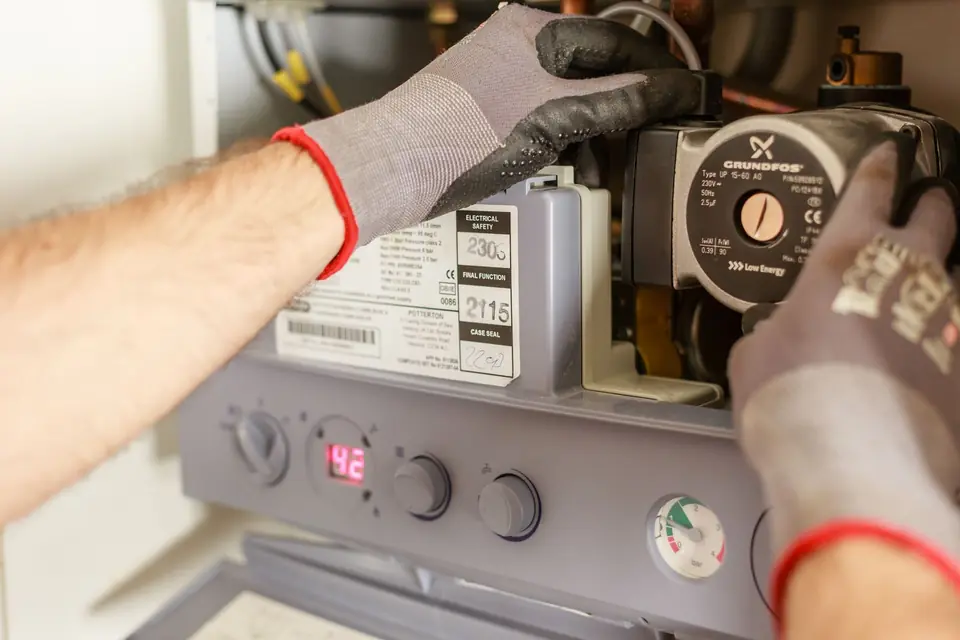
Over 15 years, a heat pump on a dedicated tariff costs around £1,000 less than a new gas boiler for a typical 3-bed semi at the midpoint of each cost range, and up to £4,500 less if your radiators need little work. On a standard electricity tariff, the boiler wins by around £4,000. The decision comes down to your electricity tariff, the BUS grant, and how long you plan to stay in your home. This guide runs the full numbers: upfront cost, running costs, maintenance, and total cost of ownership over 15 years for every common scenario.
The 15-year comparison at a glance
| Cost element (3-bed semi) | New gas boiler | Heat pump (standard tariff) | Heat pump (HP tariff) |
|---|---|---|---|
| Upfront cost | £2,500 to £3,500 | £1,500 to £4,500 (after BUS) | £1,500 to £4,500 (after BUS) |
| Radiator/cylinder upgrades | £0 | £2,800 to £5,500 | £2,800 to £5,500 |
| Annual heating cost | £1,063 | £1,089 | £745 |
| Annual maintenance | £100 | £65 | £65 |
| 15-year running total | £17,445 | £17,310 | £12,150 |
| 15-year total cost | £19,945 to £20,945 | £21,610 to £27,310 | £16,450 to £22,150 |
Gas boiler assumes 90% efficiency, 7.97p/kWh, annual service £100. Heat pump assumes COP 2.9, standard tariff 26.32p/kWh or HP tariff ~18p/kWh, service every 2 years at £150. 12,000 kWh annual heat demand. BUS grant of £7,500 applied. Ofgem price cap, October to December 2026.
Use our boiler vs heat pump calculator for a personalised comparison based on your property type and energy costs.
The tariff is the tipping point
On a standard electricity tariff, the boiler is cheaper over 15 years. On a heat pump tariff, the heat pump wins. This single decision swings the comparison by around £5,000 over 15 years.
Upfront cost comparison
New gas boiler
A new condensing gas boiler costs £2,000 to £3,500 installed, depending on the brand and whether you are replacing a combi with a combi or switching system type. This includes the boiler unit, flue, installation labour, and Gas Safe certification. No grants are available specifically for gas boilers.
Air source heat pump
An air source heat pump for a 3-bed semi costs £9,000 to £12,000 installed. The £7,500 BUS grant reduces this to £1,500 to £4,500 out of pocket. You may also need radiator upgrades (£2,000 to £4,000) and a hot water cylinder (£800 to £1,500) if replacing a combi boiler.
After the grant, the upfront gap between a boiler and a heat pump is £1,800 to £6,500 including all ancillary costs. For smaller properties where the heat pump cost is at the lower end, the gap narrows to almost nothing.
See our cost by house type guide for exact figures for your property.
Running cost comparison
This is where the long-term economics play out. Here are the annual heating costs by property type for each system.
| Property type | Gas boiler | HP (standard) | HP (HP tariff) | Annual saving (HP tariff vs gas) |
|---|---|---|---|---|
| 2-bed terrace | £708 | £726 | £497 | £211 |
| 3-bed semi | £1,063 | £1,089 | £745 | £318 |
| 3-bed detached | £1,328 | £1,361 | £931 | £397 |
| 4-bed detached | £1,594 | £1,634 | £1,117 | £477 |
Based on the Ofgem price cap for October to December 2026. Gas 7.97p/kWh at 90% efficiency. HP COP 2.9. Standard tariff 26.32p/kWh. HP tariff ~18p/kWh effective. Well-insulated properties.
On a heat pump tariff, a 3-bed semi saves £318 per year versus gas. Over 15 years that is £4,770 in running cost savings alone. A 4-bed detached saves £7,155 over 15 years. Read our heat pump running costs guide for the full breakdown.
Maintenance and reliability
Gas boilers require an annual service (£80 to £120) and a valid Gas Safe certificate. Common repairs include replacing the pump (£200 to £400), heat exchanger (£400 to £600), and printed circuit board (£300 to £500). A typical gas boiler lasts 12 to 15 years before needing replacement. Many homeowners take out boiler cover (£15 to £30/month) for peace of mind.
Heat pumps need servicing every 1 to 3 years (£100 to £200 per visit). They have fewer mechanical components than boilers and no combustion parts to wear. The main moving parts are the compressor and fan, both of which are designed to last 20 to 25 years. Common repairs are less frequent but include refrigerant top-ups (£150 to £300) and control board replacement (£200 to £400).
Over 15 years, average maintenance costs are roughly £1,500 for a gas boiler (annual service plus occasional repairs) versus £975 for a heat pump (biennial service, fewer repairs). The heat pump then continues operating for another 5 to 10 years without replacement, while the boiler likely needs replacing at year 12 to 15.
When the boiler wins
A new gas boiler is the better financial choice if:
You will not switch to a heat pump tariff. On standard electricity at 26.32p/kWh, a heat pump costs about the same to run as gas. If you cannot or will not switch tariff, there is no running cost saving to offset the higher upfront cost.
Your property needs major preparation. If your home requires extensive radiator upgrades, pipework changes, and a new hot water cylinder on top of the heat pump cost, the total investment may not pay back within your expected time in the property.
You are selling within 5 years. The running cost savings need 6 to 10 years to offset the higher upfront cost. If you are selling soon, you may not recoup the investment (though a heat pump does improve your EPC rating, which can increase sale price).
When the heat pump wins
A heat pump is the better financial choice if:
You switch to a heat pump tariff. This is the single biggest factor. On a heat pump tariff, running costs are 20 to 35% lower than gas from day one. Read our tariff comparison.
You plan to stay 7+ years. The longer you stay, the more running cost savings accumulate. At year 10+, the heat pump is clearly cheaper on total cost of ownership.
You are on oil or LPG. If you are off the gas grid, a heat pump is cheaper to run even on a standard tariff. Oil and LPG users save £120 to £270 per year on a standard tariff and £350 to £800 on a heat pump tariff.
You want future-proofing. Gas prices are subject to carbon levies that will increase over time. Electricity is increasingly generated from renewables. A heat pump positions you on the right side of this trend. Adding solar panels further reduces heat pump running costs.
Your boiler has already failed. If you are facing a boiler replacement anyway, the incremental cost of choosing a heat pump (after the BUS grant) is much smaller than the total cost. This is the optimal time to switch.
The hybrid option
If you are not ready to commit fully, a hybrid system combines a small heat pump with your existing or new gas boiler. The heat pump handles heating in mild weather (when it is most efficient) and the boiler takes over in the coldest periods. This reduces gas consumption by 40 to 60% without requiring radiator upgrades.
Hybrid systems cost £4,000 to £8,000 and currently qualify for a reduced BUS grant. They are a pragmatic middle ground for homes where a full heat pump installation would be disruptive or expensive, but come with the disadvantage of maintaining two systems.
What to do if your boiler is still working
If your current boiler is under 10 years old and working well, the most cost-effective approach is to insulate now and plan the heat pump for when the boiler eventually fails.
Start with loft insulation and cavity wall insulation. These pay for themselves within 2 to 4 years regardless of your heating system. When your boiler fails in a few years, your home will be ready for a smaller, cheaper heat pump. Check if ECO4 covers free insulation for you.
Use our EPC improvement planner to prioritise upgrades and our heat pump calculator to see what a future switch would cost.
For efficient boiler or heat pump management, see recommended smart thermostats. Track your current energy usage with recommended energy monitors to establish a baseline before switching.
Frequently asked questions
Is a heat pump cheaper than a new gas boiler over 15 years?
On a heat pump tariff, yes, by around £1,000 at the midpoint and up to £4,500 if your radiators need little work. On a standard tariff, the boiler is about £4,000 cheaper over 15 years. Use our calculator for your property.
Should I replace my boiler with a heat pump?
If your boiler has failed, yes, especially with the £7,500 BUS grant. If it is still working, insulate first and switch when it fails. Loft and wall insulation pay for themselves regardless.
How much more does a heat pump cost upfront than a boiler?
A boiler costs £2,000 to £3,500. A heat pump costs £1,500 to £4,500 after the BUS grant, plus £2,800 to £5,500 for radiators and cylinder. See our costs by house type.
Will gas boilers be banned in the UK?
New builds from 2025, yes. Existing homes, no current ban. But gas will become progressively more expensive through carbon pricing. A heat pump future-proofs your heating.
What are the maintenance costs for heat pumps vs boilers?
Boilers: ~£100/year (annual service plus occasional repairs). Heat pumps: ~£65/year (service every 2 years, fewer repairs). Heat pumps last 20 to 25 years versus 12 to 15 for boilers.
Data sources
Boiler and heat pump costs from Energy Saving Trust. Energy prices from Ofgem price cap, October to December 2026. BUS grant from GOV.UK.