Heat Pump Cost for a 5-Bed House: Full 2026 Breakdown
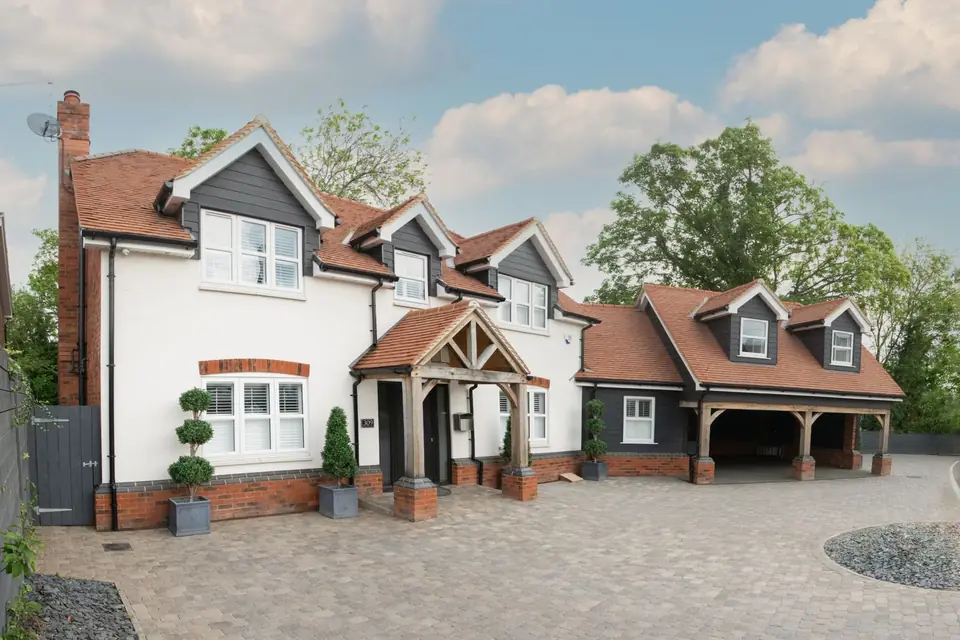
An air source heat pump for a 5-bed house costs £13,000 to £19,000 installed. The £7,500 Boiler Upgrade Scheme grant brings that down to £5,500 to £11,500. Add radiator upgrades and a large hot water cylinder and the realistic total is £17,000 to £26,000, or £9,500 to £18,500 after the grant. At the Ofgem price cap for October to December 2026 a typical 5-bed detached costs £1,490 a year to heat on a heat pump tariff, £635 less than gas, the largest saving of any house type. Here is what makes a five-bedroom job different.
In this guide
What a 5-bed heat pump really costs in 2026 Complete cost breakdown 5-bed versus 4-bed versus 3-bed detached What size heat pump for a 5-bed house Which heat pumps suit a 5-bed house Radiators, cylinders, pipework and zoning Running costs: 5-bed detached The Boiler Upgrade Scheme for a 5-bed Is a heat pump worth it for a 5-bed house Electrical supply, G99 and cascades Getting quotes: what to check Frequently asked questionsWhat a 5-bed heat pump really costs in 2026
Across every house type in England and Wales, the median Boiler Upgrade Scheme installation cost £12,908 in April to June 2026, and a quarter of jobs cost more than £15,627, according to the Microgeneration Certification Scheme (MCS). A five-bedroom detached house sits in that top quarter: 180 to 260 square metres, four exposed walls, a 14 to 18 kW unit or two in cascade, 14 to 18 radiators and a 250 to 300 litre cylinder for two bathrooms. The realistic range is £13,000 to £19,000 before the grant.
| Insulation level | Heat demand | Heat pump size | Installed cost | After £7,500 grant |
|---|---|---|---|---|
| Well insulated (post-2000, or older with 270mm loft, insulated walls, double glazing) | 16,000 to 20,000 kWh | 12 to 14 kW | £13,000 to £15,000 | £5,500 to £7,500 |
| Typical 1930s to 1990s detached with loft and cavity insulation | 20,000 to 26,000 kWh | 14 to 18 kW | £15,000 to £19,000 | £7,500 to £11,500 |
| Poorly insulated (solid walls, single glazing, cold extensions) | 28,000 to 34,000 kWh | 18 to 24 kW, often two units | £19,000 to £24,000 | £11,500 to £16,500 |
Installed cost covers the unit or units, labour, controls, commissioning and the MCS certificate. Radiators and cylinder are separate, below. Insulating first moves you up this table. Our heat pump calculator gives an estimate for your own floor area, insulation and fuel.
Complete cost breakdown
| Cost element | Range | Notes |
|---|---|---|
| Heat pump unit and installation | £13,000 to £19,000 | 14 to 18 kW air source, or two units in cascade. Includes unit, pipework, controls, MCS certificate |
| BUS grant | -£7,500 | Deducted from the installer invoice. £9,000 if you are replacing an oil or LPG boiler |
| Net heat pump cost | £5,500 to £11,500 | What you pay for the heat pump itself |
| Radiator upgrades | £3,000 to £6,000 | 6 to 9 of the usual 14 to 18 radiators need upsizing. See radiator sizing guide |
| Hot water cylinder | £1,000 to £2,000 | 250 to 300 litres for two bathrooms, or two cylinders for a house with a wing |
| Pipework modifications | £0 to £2,000 | Long runs, microbore, or a second circuit for a cascade |
| Concrete plinth | £300 to £600 | Base for the outdoor unit, or two for a cascade |
| Total out of pocket | £9,500 to £18,500 | After the BUS grant, including all ancillary costs |
0% VAT applies until March 2027. Costs from MCS installation data and Energy Saving Trust.
The heat pump is barely half the bill: radiators, cylinder, pipework and plinth add £4,000 to £7,000. A modern executive home with underfloor heating and a cylinder already in the utility room lands near the bottom of the total; a Victorian villa with 16 cast iron radiators and a combi boiler lands near the top. Ask for an itemised quote that lists each radiator to be changed.
Get heat pump quotes for your home
Tell us about your property to request quotes from MCS-certified installers covering your postcode. Free, no obligation, and nobody calls you unless you tick the box.
- MCS-certified installers only
- Grant of £7,500 handled by the installer
- No obligation, no spam
5-bed versus 4-bed versus 3-bed detached
The step from a 4-bed to a 5-bed is the biggest on the ladder, because it is where a single standard unit stops being enough and the electrical supply starts to matter.
| Property | Typical heat demand | Heat pump size | Installed cost | After £7,500 grant |
|---|---|---|---|---|
| 3-bed detached | 15,000 to 17,000 kWh | 9 to 12 kW | £10,000 to £13,000 | £2,500 to £5,500 |
| 4-bed detached | 16,000 to 20,000 kWh | 10 to 14 kW | £11,000 to £16,000 | £3,500 to £8,500 |
| 5-bed detached | 20,000 to 26,000 kWh | 14 to 18 kW | £13,000 to £19,000 | £5,500 to £11,500 |
Heat demand assumes loft insulation, double glazing and filled cavity walls where present. See our 4-bed guide for the size below and our costs by house type guide for flats, terraces, semis and bungalows.
At the October to December 2026 price cap, a 4-bed detached with 18,000 kWh of heat demand costs £1,594 a year on gas and £1,117 on a heat pump tariff; a 5-bed with 24,000 kWh costs £2,125 and £1,490. The 5-bed pays around £2,000 more to install and saves around £160 a year more, so its payback is a little longer but the pounds saved each winter are the largest of any house type.
What size heat pump for a 5-bed house
Most five-bedroom detached houses end up with a 14 to 18 kW air source heat pump. A post-2000 house, or an older one with a topped-up loft, insulated walls and new windows, can manage with 12 to 14 kW. A solid-walled Victorian villa or a 1930s house with single-glazed bays pushes towards 18 to 24 kW, usually as two units in cascade.
The number that matters is the room-by-room heat loss calculation your MCS installer must carry out before quoting. It works out how much heat each room loses on the design day, around minus 3C in southern England, and sizes the unit to cover the total plus hot water. A reasonably insulated detached house loses 50 to 70 watts per square metre, so a 200 square metre house loses 10 to 14 kW and needs a 14 to 16 kW unit. A quote with no calculation attached was sized by guesswork, and an oversized unit cycles, wears faster and costs £1,500 to £3,000 more per size band.
One large unit or two? A single 16 or 18 kW unit is cheaper and needs one plinth and one noise assessment, but at that size some models are three-phase only and the rest draw enough current to trigger a network application. Two 10 or 12 kW units in cascade cost £2,000 to £4,000 more and both count towards the noise limit. In return they modulate down further in spring and autumn, they start in stages so the inrush current is smaller, and if one fails in January the other keeps the house warm. Installers tend to cascade above 18 kW and on houses with a wing or annexe.
Insulate first to save £2,000 to £4,000
Moving a 5-bed from the typical row to the well-insulated row drops the heat pump from 14 to 18 kW to 12 to 14 kW, saves £2,000 to £4,000 on the installation and cuts the heat pump tariff bill from £1,490 to £1,117 a year. Loft insulation, cavity wall insulation and draught proofing are the cheap wins; on a Victorian villa, solid wall and underfloor insulation do the heavy lifting. Do it before the heat loss survey. Check the savings with our insulation calculator.
Which heat pumps suit a 5-bed house
The 14 to 18 kW class is where manufacturers' ranges split into single-phase and three-phase versions. These are the models you are most likely to be quoted, with ground source at the bottom.
| Model | Outputs | Refrigerant | Max flow temp | Why pick it |
|---|---|---|---|---|
| Vaillant aroTHERM plus | 12 kW, or two 12 kW in cascade | R290 | 75C | Runs hot enough to keep more radiators; two in cascade cover 18 to 24 kW on single phase |
| Mitsubishi Ecodan | 14 kW | R32 | 60C | Largest UK installer base, single-phase or three-phase, easy servicing |
| Daikin Altherma 3 H HT | 14 kW, 16 kW, 18 kW | R32 | 70C | Widest choice of single big units, holds output to minus 15C, single or three-phase |
| Samsung EHS Mono HT Quiet | 14 kW | R32 | 70C | Value high-temperature option, four-step quiet mode |
| NIBE F2120 | 16 kW, 20 kW | R410A | 65C | Very high seasonal efficiency, one of the largest single units, three-phase only |
| Viessmann Vitocal 250-A | 13 kW | R290 | 70C | Very quiet, 70C flow at minus 15C, suits a well-insulated 5-bed |
| Kensa Evo (ground source) | 13 kW, 15 kW, 17 kW | R407C | 62 to 63C (50C on the 17 kW) | UK-made ground source unit for a large plot or borehole |
| NIBE S1255 (ground source) | 3 to 12 kW inverter | R407C | 65C | Inverter ground source unit with built-in cylinder, for a well-insulated 5-bed |
Nominal ratings from the manufacturer pages in the data sources. Your heat loss calculation decides which one you need.
At this size the electrical supply narrows the field before brand does. On single phase the shortlist is the Daikin units up to 18 kW, the Ecodan or Samsung 14 kW, or a cascade of two aroTHERM plus or Vitocal units. With three-phase, the NIBE F2120-20 and the three-phase Daikin and Ecodan units heat the biggest houses from one box. Whichever you choose, ask for a design flow temperature of 50C or lower, a seasonal coefficient of performance (SCOP) above 3.5 in writing, and an MCS 020 noise assessment for each outdoor unit. Our heat pump noise guide explains the figures and our old house guide covers solid walls.
Radiators, cylinders, pipework and zoning
A heat pump heats water to 40 to 50C rather than the 65 to 75C a gas boiler uses, so radiators have to be larger to deliver the same warmth. A five-bedroom house typically has 14 to 18 radiators, and 6 to 9 need upsizing, usually the living room, dining room, hall and landing, and the largest bedrooms. Budget £3,000 to £6,000. Underfloor heating downstairs needs no change. Our radiator sizing guide explains how installers decide.
Hot water is where a five-bedroom house differs most from a semi. Two bathrooms, an en suite and five or six people mean a 250 to 300 litre cylinder, and a house with a distant wing may be better served by two smaller ones than by 25 metres of hot pipe. Allow £1,000 to £2,000. A combi boiler means there is no cylinder at all, so you also need a cupboard: a 300 litre cylinder is roughly two metres tall, and a utility room is the usual home. An existing cylinder usually still needs replacing, because heat pump cylinders have a larger coil. Pipework matters more on a big house because the runs are long: 1970s microbore often has to be replaced with 15 mm pipe on the largest radiators, and a cascade needs a low loss header to join the two units. Budget £0 to £2,000.
Zoning is the question every large-house owner asks: can the unused guest rooms be left cold? Partly. A heat pump runs best as one open system at a low, steady flow temperature, and closing off half the house makes it short-cycle. What works is one zone for the whole house, guest bedrooms set back to 16 or 17C with thermostatic valves rather than off, and weather compensation running the flow temperature as low as the day allows. A genuinely separate wing or annexe justifies a second zone, which a cascade can serve from its second unit. Do not leave rooms unheated all winter: a closed-off bedroom in a solid-walled house drops below 12C and you swap a heating bill for a condensation and mould problem.
Running costs: 5-bed detached
These figures use the Ofgem price cap for 1 October to 31 December 2026: electricity 26.32p per kWh and gas 7.97p per kWh. Gas rose 9% at this cap change while electricity barely moved, so a heat pump on a standard tariff now costs about the same to run as a gas boiler.
| Heating system | Annual cost | Saving vs gas |
|---|---|---|
| Gas boiler | £2,125 | Baseline |
| Heat pump (standard tariff) | £2,178 | -£53 (about level) |
| Heat pump (heat pump tariff) | £1,490 | £635 saving |
24,000 kWh heat demand, a typical 5-bed detached with loft and cavity insulation. Gas at 7.97p/kWh and 90% boiler efficiency. Heat pump COP 2.9 at 26.32p/kWh, or 18p/kWh effective on a well-scheduled heat pump tariff such as Octopus Cosy. Standing charges excluded.
The tariff makes or breaks the economics, and on a five-bedroom house the stakes are doubled. On a heat pump tariff you save £635 a year against gas, £12,700 over 20 years; on a standard tariff you pay £53 a year more. Disconnecting the gas supply saves a further £108 a year in standing charge. Read our running costs guide, our tariff guide for how to get an effective rate near 18p, and our electric boiler vs heat pump guide if the house is heated by electricity today.
Insulation moves these numbers more than any tariff. A well-insulated 5-bed with 18,000 kWh costs £1,594 a year on gas and £1,117 on a heat pump tariff; a poorly insulated one with 30,000 kWh costs £2,657 and £1,862. The heat pump saves £795 a year at the top of that range, but the bill is £745 higher than in the well-insulated house. Ground source cuts the bill further: at a coefficient of performance of about 4 rather than 2.9, the same 24,000 kWh costs £1,579 on a standard tariff and £1,080 on a heat pump tariff, £410 a year less than air source. A five-bedroom roof also suits a large solar array; see our solar calculator and battery storage guide.
The Boiler Upgrade Scheme for a 5-bed
The Boiler Upgrade Scheme pays £7,500 towards an air source or ground source heat pump in England and Wales, and since July 2026 £9,000 for homes replacing an oil or LPG boiler. The grant is the same whatever the size of the house or the heat pump, and that is the catch. On a semi the £7,500 covers 62% to 83% of the heat pump; on a 5-bed it covers 39% to 58%, and only 29% to 44% of the whole job. A cascade of two units on one installation gets one grant, not two. Your MCS-certified installer applies and deducts it from the invoice, the scheme runs to 2030, and installations carry 0% VAT until March 2027. Read our BUS grant guide for the eligibility rules and our grant checker for anything else you might qualify for.
Because the grant covers a smaller share, two things matter more here: timing the insulation so the heat pump you buy is the smallest that will do the job, and ground source, which carries the same £7,500 grant but roughly a third lower running costs, so its premium is repaid faster on a 24,000 kWh house than on a 12,000 kWh one. If anyone in the house receives a qualifying benefit, ECO4 and the Great British Insulation Scheme can fund the insulation outright, and a better EPC rating comes with it.
Is a heat pump worth it for a 5-bed house
Against a new gas system boiler at £3,000 to £4,500, a heat pump costs £5,000 to £15,500 more once radiators and the cylinder are included. At £635 a year saving on a heat pump tariff, that is a payback of 8 to 24 years, longer than the 6 to 20 years a semi sees because the grant covers less of the bill. Against an oil boiler the £9,000 grant and a larger saving pull the payback under 10 years. A heat pump also lasts 20 to 25 years against 12 to 15 for a boiler, and the £12,700 saved over 20 years is the largest figure on this site for any house type. Run the numbers with our boiler vs heat pump comparison and read heat pump vs new boiler for the 15-year view.
Ground source deserves a serious look on a 5-bed in a way it does not on a semi. It costs £25,000 to £40,000 installed, £17,500 to £32,500 after the same grant, and needs one or two 100 metre boreholes or 300 to 400 square metres of garden. In return the coefficient of performance is about 4, the running cost on a heat pump tariff falls from £1,490 to £1,080, and there is no outdoor unit to site or assess for noise. The premium over air source is £12,000 to £21,000 against an extra £410 a year, so it pays back only over a long ownership, but it comes into its own on a poorly insulated house, where groundworks are already planned, and where a 16 kW outdoor unit has nowhere to go.
Electrical supply, G99 and cascades
Below about 12 kW the electrical supply rarely comes up, which is why the 3-bed semi guide has no section on it. Above 12 to 14 kW it becomes the question. A 14 kW heat pump draws 20 to 25 amps at full output and an 18 kW unit up to 30 amps, plus a 3 kW immersion, on top of an oven, a shower and perhaps a car charger. A typical house has a single-phase 100 amp main fuse, but many pre-1980 houses still have 60 or 80 amp fuses.
The distribution network operator (DNO) has to be told about any heat pump, and the size decides how. Units drawing up to 32 amps per phase that appear on the Energy Networks Association's database can be fitted first and notified afterwards. Anything above that, or a house whose supply is already near its limit, needs an application before a single pipe is fitted. Installers call this the G99 application, and it is the step that adds weeks: the DNO checks the local transformer and cable, and a response can take from a fortnight to two months. It then approves the unit, asks for a soft-start device that limits the compressor's inrush current at a few hundred pounds, or asks for a supply upgrade. A fuse upgrade from 60 to 100 amps is often free; a new three-phase supply typically costs £3,000 to £8,000 depending on how far away the nearest three-phase cable is.
This is where a cascade earns its keep. Two 12 kW single-phase units start in stages, so their combined inrush is smaller than one 20 kW unit's, and they often clear a network check that a single large unit would not. The NIBE F2120 is three-phase only, and the biggest Daikin and Mitsubishi units come in both versions, so tell the installer what your supply is before they pick a model, and ask who is making the DNO application and what happens to the price if the DNO asks for a soft-start or an upgrade. A second outdoor unit also brings the combined volume nearer the 1.5 cubic metre permitted development limit; our planning permission guide covers the cases where a large or listed house needs consent.
Getting quotes: what to check
Get three quotes from MCS-certified installers who have fitted 14 kW and larger systems before, and compare them on the design rather than the headline price. Each quote should include:
- A room-by-room heat loss calculation with the design outdoor temperature stated.
- The design flow temperature, ideally 50C or lower, and the expected SCOP.
- One unit or a cascade, and why, with the model and phase of each.
- The electrical survey: main fuse rating, load added, and whether the DNO route is notify-after or apply-before.
- A radiator schedule listing all 14 to 18 emitters and which ones change.
- The cylinder size, one or two, and where each will go.
- The zoning plan and how guest rooms will be set back.
- An MCS 020 noise assessment for each outdoor unit position.
- The warranty on the units, usually 5 to 7 years, and on the installation.
- Confirmation that the installer will apply for the Boiler Upgrade Scheme and deduct it from the invoice.
Installation takes 3 to 5 days for a single unit, and up to two weeks when most radiators are swapped or two units are cascaded, not counting the DNO wait. Find installers through the MCS installer search. A large outdoor unit transmits less hum into the house on a set of anti-vibration pads. Larger households also use more hot water and electricity; our bills by household size guide shows what a family of five or six should expect.
Frequently asked questions
How much does a heat pump cost for a 5-bedroom house?
£13,000 to £19,000 installed for a 14 to 18 kW air source unit. After the £7,500 BUS grant you pay £5,500 to £11,500 for the heat pump, or £9,500 to £18,500 with radiators and a large cylinder.
What size heat pump does a 5-bed house need?
14 to 18 kW for most five-bedroom detached houses, 12 to 14 kW for a well-insulated one, and 18 to 24 kW, usually two units in cascade, for a solid-walled one. The installer's heat loss calculation decides. Insulate first to bring the size and cost down.
How much does it cost to run a heat pump in a 5-bed house?
£1,490 a year on a heat pump tariff, £2,178 on standard electricity, against £2,125 for gas, at the October to December 2026 price cap and 24,000 kWh of heat demand. See our running costs guide.
Do I need a three-phase electricity supply for a 5-bed heat pump?
Not always. Single-phase units run to 18 kW, and two 12 kW units in cascade cover larger houses on single phase. Above 32 amps the installer must apply to the network operator before fitting, which can add weeks, and the operator may ask for a soft-start device or a supply upgrade.
Is a heat pump worth it for a 5-bedroom house?
Yes on a heat pump tariff or off the gas grid. You save £635 a year against gas, £12,700 over 20 years, the largest saving of any house type, though the 8 to 24 year payback is longer than a semi's because the grant covers less of the bill. Compare with our boiler vs heat pump tool.
Is ground source better than air source for a large house?
It runs cheaper, at £1,080 a year against £1,490 on a heat pump tariff, and gets the same £7,500 grant, but costs £25,000 to £40,000 installed and needs boreholes or a large garden. It suits a poorly insulated house, a long ownership, or a plot where groundworks are already planned. See our costs by house type guide.
Data sources
Installed prices from the MCS Data Dashboard (BUS-funded installations, England and Wales, April to June 2026). Energy prices from the Ofgem price cap for October to December 2026. Grant rules from GOV.UK. Cost ranges from Energy Saving Trust and installer market data. Model outputs from the manufacturer pages for the Vaillant aroTHERM plus 12 kW, Mitsubishi Ecodan R32 14 kW, Daikin Altherma 3 H HT, Samsung EHS Mono HT Quiet, NIBE F2120, NIBE S1255, Viessmann Vitocal 250-A and Kensa Evo.