Updated 11 November 2026, with the DESNZ Boiler Upgrade Scheme statistics published on 29 October 2026.
Ground Source Heat Pump Cost in the UK: 2026 Prices
The short answer
- £22,348 to £53,345 for the middle half of UK ground source installs in July to September 2026, median £34,630
- £26,500 median over 2025/26, about twice the £13,024 for air source
- £7,500 grant in England and Wales, or £9,000 for oil or LPG homes until March 2027
- £756 a year to heat a 4-bed detached house on a heat pump tariff, against £884 with air source
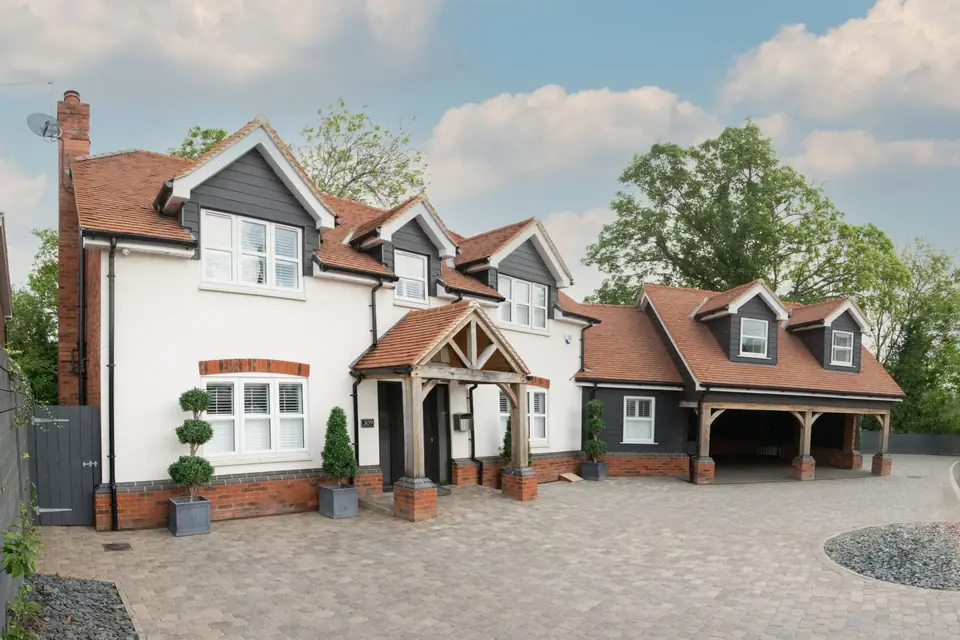
A ground source heat pump costs £22,348 to £53,345 for the middle half of UK installs, including the ground loop, cylinder, labour and VAT, with a median of £34,630. That is what installers recorded for systems paid under the Boiler Upgrade Scheme in July to September 2026, the latest quarter the Department for Energy Security and Net Zero has published. Over the whole of 2025/26 the median was £26,500 across 365 homes, about twice the £13,024 median for an air source heat pump. The £7,500 grant comes off either, or £9,000 until March 2027 for homes heated by oil or LPG with no mains gas. Ground source is still rare: 1,603 of the 96,611 grants the scheme has paid since May 2022, or 1.7%.
Ground source heat pump cost in 2026
£22,348 to £53,345 for the middle half of installs in July to September 2026, with a median of £34,630. The four quarters before sat between about £18,000 and £42,000, with medians near £27,000.
| Quarter paid | Ground source median | Ground source, middle half | Median size | Air source median | Air source, middle half |
|---|---|---|---|---|---|
| July to September 2025 | £27,490 | £17,938 to £40,775 | 12 kW | £13,000 | £10,863 to £15,580 |
| October to December 2025 | £26,841 | £20,510 to £37,626 | 13 kW | £13,437 | £11,459 to £16,030 |
| January to March 2026 | £27,352 | £20,000 to £39,737 | 13 kW | £13,103 | £11,348 to £15,789 |
| April to June 2026 | £27,232 | £18,136 to £42,110 | 10.5 kW | £12,900 | £11,125 to £15,636 |
| July to September 2026 | £34,630 | £22,348 to £53,345 | 15 kW | £12,826 | £10,717 to £15,461 |
Read the detail
The data behind this table
All figures from DESNZ Boiler Upgrade Scheme statistics, September 2026, published 29 October 2026, Table Q1.1A, England and Wales, by the quarter in which the grant was paid. Costs are self-reported by MCS installers on the installation certificate and include the system, labour and VAT, before the grant is taken off. The middle half runs from the lower to the upper quartile. Shared ground loop systems are reported separately and too few to publish for most quarters.
The latest quarter jumped because the systems were bigger. The median ground source heat pump paid in July to September 2026 was 15 kW, against 10.5 kW the quarter before and 12 to 13 kW in most quarters since 2022, and a bigger heat pump needs a longer ground loop. DESNZ also warns that the figures use the MCS certificates lodged at the time of analysis, so the latest quarter can still move as late certificates arrive. With only about 365 ground source installs a year carrying cost data, one quarter's median can swing by thousands of pounds. For a steadier comparison, the next section uses the full year 2025/26 by size.
Air source prices have barely moved over the same year: a median of £12,826 to £13,437 every quarter. If you are pricing a typical semi or terrace, our heat pump cost by house type guide covers air source in detail.
Cost by size and cost per kW
About £1,700 to £3,100 per kW of heat pump in 2025/26, falling as the system gets bigger. A 12 to 14 kW system, the most common size, had a median of £25,750.
| Heat pump size | Installs paid, 2025/26 | Ground source median | Per kW, at the band midpoint | Air source median, same size | Extra for ground source |
|---|---|---|---|---|---|
| 4 to 6 kW | 15 | £14,475 | £2,895 | £11,494 | £2,981 |
| 6 to 8 kW | 48 | £21,702 | £3,100 | £12,164 | £9,538 |
| 8 to 10 kW | 60 | £21,541 | £2,393 | £12,688 | £8,853 |
| 10 to 12 kW | 21 | £29,254 | £2,659 | £13,948 | £15,306 |
| 12 to 14 kW | 97 | £25,750 | £1,981 | £15,366 | £10,384 |
| 14 to 16 kW | 42 | £31,207 | £2,080 | £15,498 | £15,709 |
| 16 to 18 kW | 14 | £30,135 | £1,773 | £14,817 | £15,318 |
| 18 to 20 kW | 17 | £32,750 | £1,724 | £17,878 | £14,872 |
| 20 kW or more | 50 | £49,399 | Not worked out | £24,177 | £25,222 |
| All sizes | 365 | £26,500 | Not worked out | £13,024 | £13,476 |
Read the detail
The data behind this table
Median installed cost by capacity band for grants paid in the financial year April 2025 to March 2026, from DESNZ Boiler Upgrade Scheme statistics, September 2026, Table A1.3A. Each band includes its lower figure and stops short of its upper one. The cost per kW is our arithmetic: the band median divided by the band midpoint, so 6 to 8 kW is divided by 7. It is a rough guide, not a published statistic, and there is no midpoint for the open-ended top band. Extra for ground source is the ground source median minus the air source median for the same band.
Small ground source systems cost more for each kW because much of the job does not shrink with the heat pump: the drilling rig or digger has to come either way, and the cylinder, controls, commissioning and certificate cost much the same. That is why a 6 to 8 kW system cost £21,702 in 2025/26 and a 12 to 14 kW one only £25,750.
Treat the bands with fewer than about 30 installs with care. The 10 to 12 kW band, at 21 installs, sits above the bigger 12 to 14 kW band, which reflects a small sample rather than a real price step. The 20 kW or more band covers the largest jobs; DESNZ leaves out anything recorded above 45 kW. Our heat pump size guide shows how the kW figure is worked out from a home's heat demand, and the same method applies to ground source.
Borehole vs horizontal loop: which costs more?
A horizontal loop in trenches is cheaper; a borehole costs more but needs almost no garden. MyJobQuote puts an 8 kW system at about £16,000 with trenches and £22,000 with a borehole.
| Item | Horizontal loop (trenches) | Vertical loop (borehole) |
|---|---|---|
| Installed, 8 kW system | £16,000 | £22,000 |
| Installed, 11 kW system | £20,500 | £25,500 |
| Installed, 16 kW and over | Not priced | £30,000 to £38,000, with 2 to 3 boreholes |
| Labour, including groundwork | £8,000 to £10,000, 4 to 6 days | £12,000 to £15,000, 5 to 8 days |
| Drilling | None | £4,000 to £6,000 per 100 metres |
| Ground needed | About 10 metres of trench per kW, 1 to 2 metres deep | One or more boreholes, 75 to 200 metres deep |
Read the detail
The data behind this table
The scheme does not split costs by type of ground loop, so this table is a secondary view from named cost guides. Installed prices, labour, days and drilling rates from the MyJobQuote ground source heat pump cost guide, last updated 9 September 2026. Trench length per kW, trench depth and borehole depth from Which?, ground source heat pumps explained, dated 3 November 2026.
Guide prices run below what installers actually recorded. MyJobQuote's 8 kW horizontal system at £16,000 is well under the scheme's 2025/26 medians of £21,702 for 6 to 8 kW and £21,541 for 8 to 10 kW, and its borehole price is about level with them. Use the guide figures for the gap between the two loop types, and the scheme figures for the total.
A horizontal loop needs space. Which? works from roughly 10 metres of trench for each kW of heat pump, and gives the example of a 3-bed new build of about 120 square metres needing two trenches of 30 to 40 metres. MyJobQuote puts the area at often 2 to 3 times the floor area of the house. The garden is dug up for a few days and then reinstated, so it suits a plot already facing landscaping or an extension.
A borehole needs only room for a drilling rig, but its cost depends on ground you cannot see. Drilling is charged by the metre, and the depth depends on the geology, so a quote with an estimated rather than surveyed depth can move once drilling starts. Larger homes may need two or three boreholes. Under MCS rules the installer must establish the ground's thermal conductivity before designing a borehole, from a thermo-geological assessment or British Geological Survey data, which is covered further down.
Ground source heat pumps are permitted development in England, with no conditions on size or noise, as our planning permission guide explains.
Ground source vs air source heat pump
Ground source costs about twice as much to install and runs somewhat more efficiently. The 2025/26 medians were £26,500 against £13,024, and both get the same £7,500 grant.
| Ground source | Air source | |
|---|---|---|
| Median installed cost, 2025/26 | £26,500 | £13,024 |
| Middle half, July to September 2026 | £22,348 to £53,345 | £10,717 to £15,461 |
| Median size paid, July to September 2026 | 15 kW | 8 kW |
| Measured seasonal efficiency, RHPP trial average | 2.75 (94 systems) | 2.36 (297 systems) |
| Grant | £7,500, or £9,000 for oil or LPG homes | £7,500, or £9,000 for oil or LPG homes |
| Outside | Borehole or trenches; no fan unit | A fan unit against an outside wall |
| Permitted development in England | Yes, no size or noise conditions | Yes, if it passes the MCS 020(a) sound calculation |
| Share of grants paid since May 2022 | 1.7% | 97.9% |
Read the detail
The data behind this table
Costs, sizes and shares from DESNZ Boiler Upgrade Scheme statistics, September 2026, Tables A1.3A, Q1.1A and 1.1 (1,603 ground source and 94,545 air source grants paid of 96,611 in all). Efficiency is the mean whole-system seasonal performance factor (SPFH4) in the government's Renewable Heat Premium Payment trial, from the RHPP detailed analysis report for DECC, re-issued March 2017, Table 3-1. Those systems were fitted from 2011 to 2014; air source has improved since, to a median of 2.78 in the Electrification of Heat trial.
The case for ground source is efficiency in the coldest weather. The ground holds a far steadier temperature through the year than the air does, so a ground source heat pump is not drawing its heat from frosty winter air. In the government's Renewable Heat Premium Payment trial, ground source systems averaged a seasonal efficiency of 2.75 against 2.36 for air source, about 17% higher. Ground source also has no fan unit outside, which helps on a plot where an air source unit would sit close to a neighbour's window.
The case against is cost and disruption: about £13,476 more at the median, plus a dug-up garden or a drilling rig on the drive. For a typical semi or terrace without much land, air source is the practical choice. Ground source makes most sense on a large plot, in a self-build where the groundworks are happening anyway, or where an outdoor unit has nowhere acceptable to go. To price the air source alternative for your own home, the heat pump calculator works it out from your house type and insulation.
Running costs: ground source, air source, gas and oil
About £756 a year for a 4-bed detached house on a heat pump tariff, against £884 with air source, £1,164 with gas and £1,747 with oil. That assumes ground source runs about 17% more efficiently than air source.
| Home, average insulation | Heat a year | Gas boiler | Oil boiler | Air source, heat pump tariff | Ground source, heat pump tariff | Ground source, standard tariff |
|---|---|---|---|---|---|---|
| 3 bed semi | 9,900 kWh | £877 | £1,316 | £666 | £570 | £802 |
| 3 bed detached | 10,530 kWh | £932 | £1,400 | £708 | £606 | £853 |
| 4 bed detached | 13,140 kWh | £1,164 | £1,747 | £884 | £756 | £1,064 |
| 5 bed detached | 17,550 kWh | £1,554 | £2,333 | £1,181 | £1,010 | £1,421 |
Read the detail
The data behind this table
Heat demand from our heat model, built on DESNZ NEED 2026 gas use, at average insulation. Gas at 7.97p/kWh and 90% boiler efficiency; oil at 11.3p/kWh and 85%. Air source at a seasonal efficiency of 2.78, the median measured in the Electrification of Heat trial. Ground source at 3.25, our estimate explained below. Heat pump tariff at 18.7p/kWh effective, a tariff such as Cosy Octopus with most heating in the cheap hours; standard tariff at 26.32p/kWh, the Ofgem cap for October to December 2026. Unit costs only, without standing charges.
Why 3.25 for ground source. The government's Electrification of Heat trial, which gives our air source figure of 2.78, had too few ground source systems to give a reliable typical figure. The earlier Renewable Heat Premium Payment trial did: across 94 ground source and 297 air source systems monitored for a year, ground source averaged 2.75 and air source 2.36, a 17% lead. Applying that lead to today's air source median of 2.78 gives 3.24, which we round to 3.25, the figure our model already uses for the best tenth of air source systems. It is an estimate, not a measurement. Some guides quote 3.5 to 4.5, as Which? does; measured whole-system results in UK homes have come in lower.
At 3.25 a ground source heat pump beats gas even on a standard tariff: a kWh of heat costs 8.1p, against 8.86p from a gas boiler, while a typical air source system at 2.78 does not. On a heat pump tariff the same heat costs about 5.75p. See our heat pump tariffs guide for the tariffs that get you there.
The saving against air source is small next to the extra install cost. For a 4-bed detached house, which needs about 12 kW, ground source saves £128 a year on a heat pump tariff and £180 on a standard one. The scheme's 2025/26 medians put a 12 to 14 kW ground source system £10,384 above air source, so the running cost alone takes 58 to 81 years to pay it back. Against oil the picture changes: the same house saves £991 a year moving from oil to ground source on a heat pump tariff, and £408 moving from gas. Our heat pump running costs guide has the full air source comparison.
The Boiler Upgrade Scheme grant for ground source
£7,500 off a ground source heat pump in England and Wales, or £9,000 until March 2027 for homes heated by oil or LPG with no mains gas. That brings the 2025/26 median of £26,500 down to £19,000.
| Cost measure | Before the grant | After £7,500 grant | After £9,000 grant (oil, LPG) |
|---|---|---|---|
| Median, all sizes, 2025/26 | £26,500 | £19,000 | £17,500 |
| Median, 12 to 14 kW, 2025/26 | £25,750 | £18,250 | £16,750 |
| Middle half, July to September 2026 | £22,348 to £53,345 | £14,848 to £45,845 | £13,348 to £44,345 |
Read the detail
The data behind this table
Grant amounts from GOV.UK, Boiler Upgrade Scheme: what you can get: £7,500 towards a ground source heat pump, including water source heat pumps and those on shared ground loops, plus £1,500 until March 2027 where the property is heated by oil or LPG and has no mains gas connection. Costs before the grant from DESNZ Boiler Upgrade Scheme statistics, September 2026, Tables A1.3A and Q1.1A.
The grant is the same for ground source as for air source, so it covers a much smaller share of the bill: about 28% of the median ground source job against 58% of the median air source one. One grant is allowed per property. The installer applies and takes it off the invoice; our Boiler Upgrade Scheme guide walks through the steps.
Ground source grants go to a different kind of home from air source. Of the 1,603 paid since May 2022, 881, or 55%, went to homes with no previous heating system, which DESNZ says means a first heating system, for example in an eligible custom-build. Another 365 (23%) replaced oil and only 173 (11%) replaced gas. Self-built homes can qualify, while new builds still being built by a developer cannot, according to GOV.UK. If you are buying or running an off-gas home on oil, the £9,000 rate and the oil saving above make ground source easier to justify.
Heat pump installations carry 0% VAT until 31 March 2027, according to HMRC VAT Notice 708/6, and the costs above already reflect that. The scheme covers England and Wales only. In Scotland, GOV.UK points homeowners to Home Energy Scotland for a grant or an interest-free loan.
What an MCS installer must work out before quoting
The ground loop has to be sized to your home's yearly heat demand and the ground under it. MCS rules require the loop fluid to stay above 0°C year after year, so an undersized loop is a design fault, not a saving.
| What the installer establishes | How, under MIS 3005-D | Why it moves the price |
|---|---|---|
| Heat loss and yearly heat demand | Heat loss to BS EN 12831, and yearly demand for heating and hot water | Sets the heat pump size and the loop length |
| Average ground temperature | Met Office average air temperature for a horizontal loop; geological assessment or BGS data for a borehole | Colder ground gives less heat per metre |
| Ground thermal conductivity | Thermo-geological assessment or BGS data for a borehole; site assessment or soil tests for trenches | Ground that conducts poorly needs more metres |
| Loop length | Watts per metre from the MGD 007 tables for a borehole, horizontal loop or slinky, or design software | Every metre of drilling or trench is paid for |
| Systems of 30 kW or more | Design software is required | A larger job needs a full design |
Read the detail
The data behind this table
From the MCS heat pump design standard, MIS 3005-D: 2025, Issue 1.0, dated 1 January 2025, section 3.7. The Boiler Upgrade Scheme only pays for systems with an MCS certificate, which is where the installed costs on this page come from.
The standard says the fluid returning from the ground must settle above 0°C, with the ground recovering fully each year. A loop that is too short pulls the ground colder every winter, the heat pump works harder and its efficiency falls. So a cheap quote with less drilling or trench than the others is worth questioning, not just accepting.
When comparing quotes, ask each installer for the same things: the heat loss figure, the heat pump size, the metres of borehole or trench, the watts per metre and ground conductivity they designed to, whether the drilling depth is surveyed or estimated, and who removes the spoil. Ask too whether radiator upgrades are included, because ground source works best at low water temperatures. Our guides to radiator sizing and underfloor heating costs cover that side of the job.
Frequently asked questions
How much does a ground source heat pump cost?
Half of the ground source heat pumps paid under the Boiler Upgrade Scheme in July to September 2026 cost £22,348 to £53,345, including the ground loop, labour and VAT, with a median of £34,630. Over the whole of 2025/26 the median was £26,500 across 365 homes. The £7,500 grant comes off that.
Is a borehole or a horizontal loop cheaper?
A horizontal loop in trenches is cheaper if you have the land. MyJobQuote prices an 8 kW system at about £16,000 with trenches and £22,000 with a borehole, and puts drilling at £4,000 to £6,000 per 100 metres. Which? puts trenches at roughly 10 metres per kW of heat pump.
How much does a ground source heat pump cost per kW?
About £1,700 to £3,100 per kW in 2025/26, working from the scheme's median cost for each size band. Smaller systems cost more per kW, because the drilling or digging, the cylinder and the labour do not shrink in line with the heat pump.
Is there a grant for a ground source heat pump?
Yes. In England and Wales the Boiler Upgrade Scheme pays £7,500 towards a ground source heat pump, including shared ground loops and water source systems, or £9,000 until March 2027 if the home is heated by oil or LPG and has no mains gas. Scotland has its own grant and loan through Home Energy Scotland.
How much does a ground source heat pump cost to run?
On our model a 4-bed detached house costs about £756 a year to heat with ground source on a heat pump tariff, against £884 with air source, £1,164 with gas and £1,747 with oil. That assumes ground source runs at a seasonal efficiency of 3.25, about 17% better than air source, the gap the government's earlier field trial measured.
Is ground source worth it over air source?
Rarely on running costs alone. For a 4-bed detached house a ground source system costs about £10,384 more to install and saves £128 to £180 a year, which takes 58 to 81 years to pay back. It makes more sense on a large plot, in a self-build, or where an outdoor unit has nowhere acceptable to go.
Data sources
Updated 11 November 2026.
Installed costs come from the DESNZ Boiler Upgrade Scheme statistics, September 2026. Loop type prices come from MyJobQuote and Which?, efficiency from two government field trials, and design rules from MCS.
Show every source
Installed costs, sizes and grant counts from the DESNZ Boiler Upgrade Scheme statistics, September 2026, published 29 October 2026, Tables Q1.1A, A1.3A, 1.1 and 1.3; costs are self-reported by MCS installers and include the system, labour and VAT, before the grant. Borehole and trench prices from the MyJobQuote ground source heat pump cost guide, updated 9 September 2026, and trench and borehole sizes from Which?. Ground and air source efficiency from the RHPP detailed analysis report (DECC, re-issued March 2017) and the Electrification of Heat trial report. Ground loop design rules from MCS MIS 3005-D: 2025. Energy prices from the Ofgem price cap, October to December 2026; heat pump tariff as costed in our tariffs guide. Grant rules from GOV.UK. Full method on our methodology and data sources pages.