Roof Replacement Cost in 2026: What a New Roof Really Costs
The short answer
- £7,000 to £14,000 to re-roof a typical 3-bed house in tiles, the middle of five UK cost guides
- £4,500 to £7,500 for a terrace and £8,000 to £14,500 for a detached house in concrete tiles; slate costs more
- £1,600 to £3,300 to replace a flat roof of about 20 m² in felt, EPDM rubber or GRP
- Insulation is required in England when you renovate more than 50% of a roof: a U-value of 0.16, often 250mm in the loft
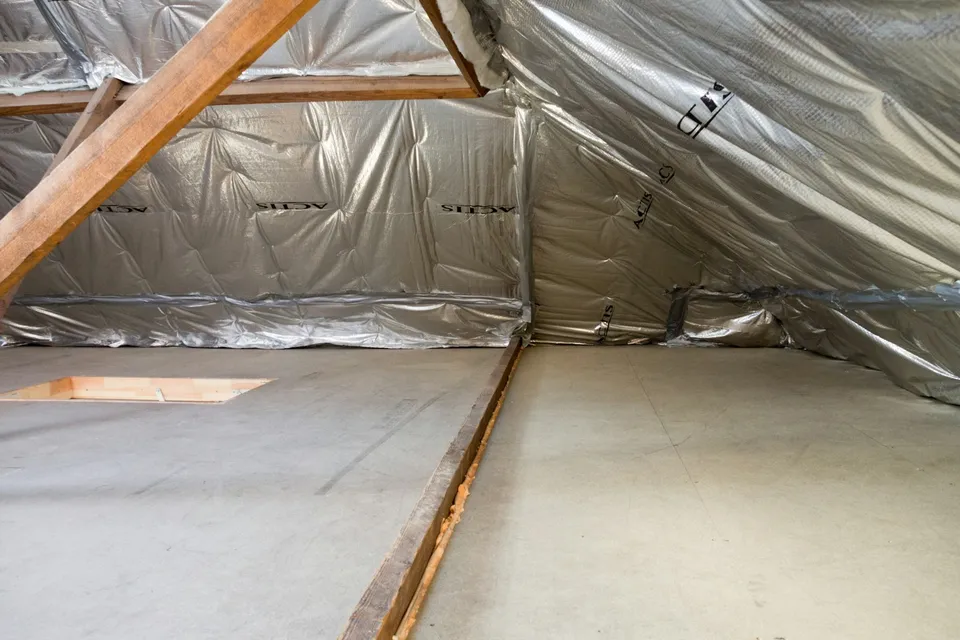
Retrofit Planner's comparison of five UK cost guides puts a new tiled roof on a typical 3-bed house at £7,000 to £14,000 in 2026. A terrace costs about £4,500 to £7,500 in concrete tiles and a detached house £8,000 to £14,500; natural slate costs roughly twice as much as concrete tiles. A flat roof of about 20 m², such as a garage or a small extension, costs £1,600 to £3,300 to replace. There is no free official price data for roofing, so every range here is the middle half of the published prices, which we show side by side below. In England, stripping more than half a roof back to its rafters, or replacing a flat roof's waterproof layer, also brings in a legal duty to insulate it to current standards.
New roof cost by house type
Re-roofing in concrete tiles costs about £4,500 to £7,500 for a terrace, £6,500 to £10,500 for a semi and £8,000 to £14,500 for a detached house. The size of the roof, its shape and the scaffolding decide most of the difference.
| House | Typical cost, concrete tiles | Time on site |
|---|---|---|
| Terrace, 2 to 3 bed | £4,500 to £7,500 | 2 to 5 days |
| Semi-detached, 3 bed | £6,500 to £10,500 | 3 to 8 days |
| Detached, 3 to 4 bed | £8,000 to £14,500 | 3 to 10 days |
| Bungalow, 2 bed | £3,000 to £5,000 (one guide) | Not given |
The data behind this table
The middle half of the house type prices published by MyJobQuote, BestBuilders and Trade2Base, read on 11 November 2026, worked out the same way as our other ranges (see "How we work out our range" below). MyJobQuote's figures cover its standard roof shapes, from a plain gable to a hip with two valleys, and leave out scaffolding; BestBuilders includes £1,500 of scaffolding and VAT; Trade2Base calls its rates all-in. Only MyJobQuote prices a bungalow, so that row is its range alone. Times are the spread of what the same guides say.
Read the detail
A terrace has the smallest roof and shares its scaffolding line with the neighbours, which keeps it cheapest. A semi adds an exposed side and often a hipped end. A detached house has the most roof and usually needs scaffolding on every side. A bungalow can cost about the same as a terrace even though its roof is often larger, because it is low enough to need little or no scaffolding, as BestBuilders notes.
Shape matters as much as size. On MyJobQuote's figures, a semi with a plain gable roof costs £3,250 to £3,750 before scaffolding, and the same house with a hipped roof and two valleys £5,750 to £6,250. A mansard roof on a semi costs £7,500 to £12,000. Every valley, hip, chimney and dormer adds cutting, lead and labour.
Region matters too. MyJobQuote puts London 25 to 30% above the national average and the North East and Northern Ireland 10 to 15% below it; BestBuilders puts London 27% above the Midlands and Northern Ireland 12% below.
New roof cost by roof material
On a 3-bed semi, a new roof costs about £5,500 to £10,500 in concrete tiles, £7,000 to £14,000 in clay tiles and £14,000 to £19,000 in natural slate. Slate costs the most but lasts the longest.
| Material | 3-bed semi | Lifespan |
|---|---|---|
| Concrete tiles | £5,500 to £10,500 | 40 to 60 years |
| Clay tiles | £7,000 to £14,000 | 60 to 100 years |
| Natural slate | £14,000 to £19,000 | 100 years or more |
The data behind this table
Concrete and clay tiles: MyJobQuote, BestBuilders and Trade2Base. Natural slate: MyJobQuote and BestBuilders only, so treat that range as rougher. Lifespans are BestBuilders' figures. Read on 11 November 2026.
Read the detail
Concrete interlocking tiles are large, quick to lay and the cheapest covering per square metre: MyJobQuote puts the material alone at £35 to £75 a square metre. Clay tiles cost a little more and last longer. Plain tiles, the small flat tiles on many older houses, take far more tiles per square metre, and Trade2Base says they add about 20 to 40% to the price. Natural slate is the dearest common covering, at £95 to £275 a square metre for the material on MyJobQuote's figures.
If your house is in a conservation area or is listed, check with the council before changing the material. A heavier covering, such as concrete tiles in place of slate, can also need the roof timbers checked.
What five cost guides say
Published prices for re-roofing a 3-bed house in tiles run from £3,250 to £21,000. Our range is the middle half of every figure the five guides give, which sets aside the cheapest and the dearest.
| Guide | Tiled roof, 3-bed house | Natural slate, 3-bed semi | Flat roof |
|---|---|---|---|
| MyJobQuote, updated 3 November 2026 | £3,250 to £5,000 (concrete, semi, no scaffolding) | £7,500 to £18,000 or more | £80 to £180 per m² in felt, EPDM or GRP |
| Which?, 22 October 2026 | £7,000 to £21,000 (tiles, type not given) | Not given | £1,400 to £4,000 for a single garage, 6m by 3m |
| Rated People, 2026 prices | £14,500 gable, £15,500 hip (averages, size not given) | Not given | £2,450 to £3,350 for 4m by 5m |
| BestBuilders, updated 10 November 2026 | £9,200 to £13,000 (concrete, semi) | £15,850 to £22,350 | £60 to £135 per m² in felt, EPDM or GRP |
| Trade2Base, 14 June 2026 | £7,000 to £11,000 (concrete, semi) | Not given | Not given |
| Our range: the middle half | £7,000 to £14,000 | £14,000 to £19,000 | £1,600 to £3,300 for 20 m² |
The data behind this table
Read on 11 November 2026. Which? and BestBuilders say how they treat VAT: Which? leaves it out and BestBuilders includes it. MyJobQuote and Trade2Base do not say, and Rated People's page says both. Which?'s figures come from 11 of its Trusted Traders, gathered in November 2025. BestBuilders' come from its own cost model, checked by a roofing firm. The others do not publish a sample or method. Checkatrade's and MyBuilder's roofing pages refused our requests, so their figures are not in the table.
Read the detail
Four of these guides come from websites that match homeowners with tradespeople (MyJobQuote, Rated People, BestBuilders and Trade2Base), and one from a consumer body that surveyed its own approved traders (Which?). The biggest single reason they disagree is scaffolding. MyJobQuote leaves it out and prices it separately at £3,750 to £4,950 for the front of a house, or £5,350 to £6,250 to wrap a semi, for a six-week hire; BestBuilders adds a flat £1,500. Rated People's averages are the highest and do not give a house size.
How we work out our range
For each column we put every published figure into one list: both ends of a range, or the single average where that is all a guide gives. Where a guide splits by material we use its concrete tile figure for a semi in the tiled column. Our range is the middle half of that list, from its lower quartile to its upper quartile, rounded to the nearest £500. For a tiled 3-bed house the list is £3,250, £5,000, £7,000, £7,000, £9,200, £11,000, £13,000, £14,500, £15,500 and £21,000, which gives £7,000 to £14,000. Flat roofs are worked out per square metre for each material and multiplied by 20; see the flat roof section. A single unusually high or low guide moves the range very little.
Flat roof replacement cost
Replacing a flat roof of about 20 m² costs £1,600 to £3,300. Felt is the cheapest, EPDM rubber and GRP fibreglass cost more and last longer.
| Material | Per m², fitted | About 20 m² | Lifespan |
|---|---|---|---|
| Felt, built up in layers | £80 to £120 | £1,600 to £2,400 | 15 to 20 years, or more than 25 for modern systems |
| EPDM rubber | £110 to £165 | £2,200 to £3,300 | 25 to 50 years |
| GRP fibreglass | £120 to £155 | £2,400 to £3,100 | 20 to 30 years |
The data behind this table
The middle half of the fitted prices per square metre in four guides, rounded to the nearest £5: MyJobQuote (felt £80 to £120, EPDM £110 to £160, GRP £120 to £180), BestBuilders (£60 to £90, £85 to £115, £95 to £135), Rated People (£2,450, £3,350 and £3,050 for a 4m by 5m roof) and Which? (felt £1,400 to £3,500, EPDM or PVC £1,950 to £4,000 for a 6m by 3m garage; no GRP figure). We divided the Rated People and Which? totals by the roof area. Lifespans are the spread of MyJobQuote's and BestBuilders' figures. Read on 11 November 2026.
Read the detail
Felt is laid in two or three layers, usually torched on. It is cheap and quick, and modern felt systems last far longer than the old kind. EPDM is a single sheet of synthetic rubber, which means few or no joints on a small roof. GRP is fibreglass laid wet over boards and set hard, which gives a tough surface you can walk on. MyJobQuote and Rated People quote 1 to 3 days on site for a garage or extension roof.
A flat roof over an unheated garage is not part of the heated house. A flat roof over a kitchen, an extension or a dormer is part of the house, and replacing its waterproof layer counts as renovating it under the Building Regulations, as the next sections explain. That can mean adding insulation on top of the deck, which raises the roof, so ask about the height of the edges and any doorway onto it before you agree a price.
Scaffolding, removal and other extras
Scaffolding is the extra that moves a quote most, from about £900 to over £6,000 depending on the house and the hire period. Ask every roofer whether it is in the price.
| Item | What the guides say |
|---|---|
| Scaffolding | Trade2Base £900 to £2,500; BestBuilders £1,500, or about £1,900 in London; Rated People about £2,280; MyJobQuote £3,750 to £6,250 for a six-week hire |
| Stripping the old roof | Rated People about £950, from £800 to £1,400, plus about £600 for a skip |
| Asbestos | MyJobQuote about £325 for a survey and typically £2,750 to remove it from a roof |
| Loft insulation to 270mm | £600 to top up, or £750 from nothing (Energy Saving Trust) |
| Insulation at rafter level | Rated People about £35 per m² for a warm or cold deck |
| Contingency | MyJobQuote advises budgeting 10 to 15% extra on a flat roof |
Read the detail
Scaffolding is priced by the length of the house, the number of lifts and the weeks it stays up, so the guides' figures are not directly comparable: MyJobQuote's is for a six to eight week hire, which it says is the usual minimum. If you are thinking about solar panels, a new roof is the cheapest moment to add them, because the scaffolding is already up. Other items often found once the tiles are off are rotten battens or rafters, a chimney that needs repointing or new lead, and old fascias and soffits; BestBuilders lists rafter repairs, chimney rebuilds, guttering and soffits among what its prices leave out.
If the roofer suspects asbestos in old roof sheets, soffits or felt, a survey comes first, and removal is priced separately.
The rule on insulating a renovated roof
In England, if you renovate more than 50% of a roof, the whole roof should be insulated to a U-value of 0.16, so far as that is technically, functionally and economically feasible. Stripping a roof back to its rafters and replacing a flat roof's waterproof layer both count as renovation.
| Your roof | Target U-value | What Approved Document L suggests |
|---|---|---|
| Pitched roof, cold loft, under 50mm of insulation | 0.16 | 250mm of mineral wool or cellulose between and across the ceiling joists |
| Pitched roof, cold loft, 50mm to 100mm in good condition | 0.16 | Top up to at least 250mm |
| Room in the roof, with or without dormers | 0.16 | Insulation between and below the rafters, or between and above them |
| Flat roof, under 100mm of insulation | 0.16 | Insulation between and over the joists |
Where this rule comes from
Regulation 23(1) of the Building Regulations 2010 says that where the renovation of a thermal element "amounts to the renovation of more than 50% of the element's surface area", or is a major renovation, "the renovation must be carried out so as to ensure that the whole of the element complies" with the energy requirement, "in so far as that is technically, functionally and economically feasible". Approved Document L, Volume 1: Dwellings, 2021 edition incorporating 2023 amendments, paragraph 11.2 lists what counts as renovation, including "stripping down the element to expose basic structural components (e.g. bricks, blocks, rafters, joists, frame) and then rebuilding" and "replacing the waterproof membrane on a flat roof". Paragraph 11.3 sets the threshold at more than 50% of the individual element, or a major renovation, which it defines as "more than 25% of the surface area of the external building envelope". The 0.16 target is Table 4.3, column (b). The examples in the table above are from Table C1.
Read the detail
A U-value measures how much heat passes through a square metre of roof; lower is better. The rule is often quoted as a 25% threshold, but for a roof the trigger that usually matters is 50% of that roof. The 25% figure is for a "major renovation" of the whole outside of the house, walls and floor included.
The rule has limits. Under paragraph 4.13, if 0.16 is not technically or functionally possible, or would not pay back within 15 years, the roof should be insulated to the best standard that is possible and does pay back within 15 years, and generally to no worse than 0.7. Table 4.3 allows a lesser standard where meeting 0.16 would cut headroom, as long as the insulation fills at least the depth of the rafters, and on a flat roof where the frame cannot take the load or the edges cannot be raised. Any insulation work also has to manage condensation, which Approved Document L flags in every row of Table C1; our condensation guide explains why ventilation matters.
For most pitched roofs over a cold loft, meeting the rule is simple and cheap: the insulation goes on the loft floor, not in the roof, which you can also do yourself. A room in the roof, or a flat roof over a living space, costs more because the insulation goes in the roof itself. Because the rule is part of the Building Regulations, ask the roofer how the work will be signed off, and keep the certificate. These rules are for England; Wales, Scotland and Northern Ireland set their own. A new edition of Approved Document L, Volume 1 takes effect in England on 24 March 2027.
What insulating the roof saves
Loft insulation cut gas use by a median 3.2% in government data, about £28 a year for a 3-bed semi on gas. A loft with little or nothing in it, the case the rules target when a roof is replaced, usually saves more.
| Home, heated by gas | Measured saving a year |
|---|---|
| 4 bed detached house | £37 |
| 3 bed detached house | £30 |
| 3 bed bungalow | £29 |
| 3 bed semi-detached | £28 |
| 3 bed mid-terrace | £25 |
How we work this out
The median 3.2% fall in gas use the government measured in 1,486 homes insulated between May 2023 and May 2024 (NEED Impact of Measures, DESNZ, 11 June 2026, Table 1), applied to each home's typical gas use in our heat model and priced at the Ofgem cap for October to December 2026, 7.97p per kWh. The same figures, with payback, are in our guide to whether loft insulation is worth it. The measured figure covers top-ups as well as bare lofts. We have no measured figure for insulation at rafter level or on a flat roof, so we do not give one.
Read the detail
The insulation the rules ask for is a small part of the cost of a new roof: £600 to £750 for loft insulation on the Energy Saving Trust's figures, against several thousand pounds for the roof. Homes heated by oil, LPG or electricity save more in pounds, because each unit of heat costs more. Part of the gain shows up as a warmer house rather than a smaller bill.
On our EPC model, insulating a loft that has less than 100mm today adds about 7 points, as we explain in how EPC points are calculated. A new roof covering on its own changes nothing in the rating; the insulation does. If you are on a qualifying benefit, check whether you can get free loft insulation before paying for it.
Repair or replace?
Repair a roof with a few slipped tiles or a leaking flashing; replace it when the covering, battens or felt are failing across the roof. The English Housing Survey found roof disrepair in 388,000 homes in England, 2% of the total.
Read the detail
In the English Housing Survey, trained surveyors count a roof as in disrepair when its structure or covering needs replacing or major repair. In 2023 that applied to 388,000 dwellings, about 2% of homes in England. It matters for more than the roof: in the 2024 to 2025 survey, 38% of homes with roof disrepair had moisture damage after a storm in the previous year, against 17% of homes without it.
Signs that a repair will not be enough include tiles or slates slipping in many places, daylight through the roof, sagging between rafters, crumbling or rotten battens, and old felt that tears when touched. A roof of concrete tiles laid in the 1960s or 1970s may be near the end of the 40 to 60 years BestBuilders gives them. On the other hand, a single leak around a chimney or a few broken tiles is a repair.
How long a new roof takes
Usually 3 to 8 days on site for a semi or detached house, and 2 to 3 days for a small terrace or a flat roof. A large or complex roof can take two weeks or more.
| Guide | Terrace | Semi or detached | Flat roof |
|---|---|---|---|
| MyJobQuote | 2 to 3 days | 3 to 5 days | 2 to 3 days |
| BestBuilders | 3 to 5 days | 5 to 8 days (semi), 6 to 10 (detached) | Not given |
| Trade2Base | Not given | 4 to 7 days (semi) | Not given |
| Rated People | 4 to 7 days for a full replacement | 2 to 3 days | |
Read the detail
Heavy rain stops work on an open roof, so allow for delays in winter. Scaffolding hire is often charged by the week, so a delay can add to the bill; ask how the quote handles it.
How to get quotes
Get at least three itemised quotes for the same job, and compare what each includes. A cheap quote that leaves out scaffolding, waste and insulation is not cheap.
Read the detail
- Ask for each line priced separately: scaffolding and how many weeks of hire, stripping and skips, new battens and breathable membrane, tiles or slates, ridge and verge, lead, fascias and gutters, insulation and VAT.
- Ask what insulation the roofer will fit to meet the Building Regulations, and who will sign the work off.
- Ask what happens if rotten timber is found, and the price per rafter or per square metre for replacing it.
- Ask about the guarantee on the work and on the materials, and whether it is insured if the firm stops trading.
- Ask to see a roof the same firm finished a few years ago.
We do not recommend roofers yet, and no link on this page is paid. When we do, every firm will have to meet our trusted supplier standard. If you are converting the loft at the same time, see our loft conversion cost guide: the roof is opened up either way, so it is worth planning the two together.
Frequently asked questions
How much does a new roof cost in the UK?
A new tiled roof on a typical 3-bed house costs £7,000 to £14,000 in 2026, the middle half of the prices five UK cost guides publish. Expect about £4,500 to £7,500 for a terrace and £8,000 to £14,500 for a detached house in concrete tiles. Natural slate on a 3-bed semi costs £14,000 to £19,000. Not every price includes scaffolding, so check each quote.
How much does a flat roof replacement cost?
About £1,600 to £3,300 for a flat roof of 20 m², such as a single garage or a small extension: £80 to £120 per m² in felt, £110 to £165 in EPDM rubber and £120 to £155 in GRP fibreglass. Replacing the waterproof layer over a living space counts as renovation, so the roof may also need insulating.
Do I have to insulate my roof when I replace it?
Usually, yes, in England. Under regulation 23 of the Building Regulations, if you renovate more than 50% of a roof, the whole roof should be insulated to a U-value of 0.16, so far as that is technically, functionally and economically feasible. Approved Document L counts stripping a roof back to the rafters and replacing a flat roof's waterproof membrane as renovation. For a pitched roof over a cold loft that usually means about 250mm of loft insulation.
Is a slate roof more expensive than a tiled roof?
Yes. On a 3-bed semi, natural slate costs £14,000 to £19,000, against £5,500 to £10,500 for concrete tiles and £7,000 to £14,000 for clay tiles, on the guides that price each material. Slate lasts longest: BestBuilders puts natural slate at 100 years or more, against 40 to 60 years for concrete tiles.
How long does it take to replace a roof?
Usually 3 to 8 days on site for a semi or detached house, and 2 to 3 days for a small terrace or a flat roof, according to MyJobQuote, BestBuilders, Trade2Base and Rated People. A large or complex roof can take two weeks or more.
How much does insulating the roof save?
Loft insulation cut gas use by a median 3.2% in government data for 1,486 homes, about £28 a year for a 3-bed semi on gas at October 2026 prices. A loft with little or no insulation, the case the rules target when a roof is replaced, usually saves more. On our EPC model, insulating a loft with under 100mm adds about 7 points.
Data sources
Updated 11 November 2026.
Prices come from five UK cost guides, read on 11 November 2026. The insulation rule comes from the Building Regulations and Approved Document L, disrepair from the English Housing Survey, and savings from government data and our heat model.
Show every source
Roof prices: MyJobQuote, How much does a new roof cost in the UK? (updated 3 November 2026) and MyJobQuote, How much does a flat roof replacement cost? (updated 20 October 2026); Which?, How much do roof repairs cost? (22 October 2026, a survey of 11 Which? Trusted Traders in November 2025, VAT excluded); Rated People, How much does a new roof cost? (first published 15 August 2022, prices stated as accurate for 2026); BestBuilders, Roof replacement cost by type (updated 10 November 2026, VAT included, from its own cost model); Trade2Base, Tile roof replacement costs UK (14 June 2026). All read on 11 November 2026.
The insulation rule from regulation 23(1) of the Building Regulations 2010 and Approved Document L, Volume 1: Dwellings, 2021 edition incorporating 2023 amendments: paragraphs 4.11 to 4.13, 11.2 and 11.3, Table 4.3 and Table C1. Roof disrepair from the English Housing Survey 2023 to 2024: drivers and impacts of housing quality (MHCLG, 17 July 2025) and the English Housing Survey 2024 to 2025: weather resilient homes fact sheet (MHCLG, 9 July 2026).
Savings from the DESNZ National Energy Efficiency Data-Framework Impact of Measures (11 June 2026) and our heat model, with energy prices from the Ofgem price cap for October to December 2026. Loft insulation costs from the Energy Saving Trust, as used in our loft insulation guide. EPC points from our EPC model. Full method on our methodology and data sources pages.